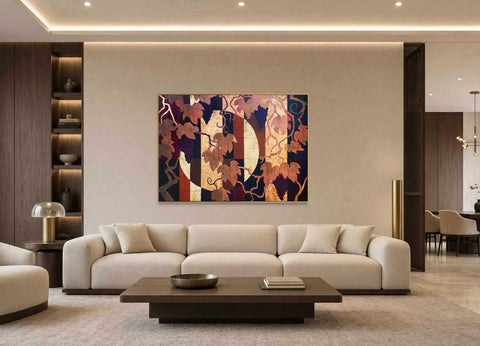
Today, luxury is understood differently than it was just a few decades ago. It's not about opulence or excess, but rather atmosphere, materiality, and the feeling of having arrived at a special place. High-quality hotels, exclusive living spaces, and boutique hotels, in particular, are therefore looking for a design that radiates elegance while conveying tranquility, naturalness, and individuality.
In this context, the term Botanical Luxury is becoming increasingly common. It describes a form of interior design in which nature is not used decoratively but becomes an integral part of high-quality architecture. Noble materials, organic forms, warm lighting, and floral elements merge into a harmonious overall composition.
However, Botanical Luxury is much more than an interior design trend. It represents a new attitude towards living and design. Rooms should not only look beautiful but also touch, inspire, and remain in memory for a long time.
Art plays a special role in this. It connects architecture, materials, and atmosphere into a common visual language and gives rooms the individuality that makes them unique.

1. What does Botanical Luxury mean?
The term Botanical Luxury describes a design philosophy that combines luxurious materials with the timeless beauty of nature. The focus is not on individual plants or floral decorations, but on the harmonious connection of architecture, light, high-quality surfaces, and organic forms.
Unlike the playful Urban Jungle style or classic flower arrangements, Botanical Luxury pursues a much more minimalist and elegant approach. Nature here appears cultivated, balanced, and deliberately staged. It complements the architecture instead of competing with it.
Typical materials include natural stone, wood, brass, bronze, textured fabrics, or handcrafted surfaces. In addition, there are botanical motifs, curved lines, and warm color palettes that exude tranquility and value. The result is rooms that are simultaneously modern, timeless, and sensual.
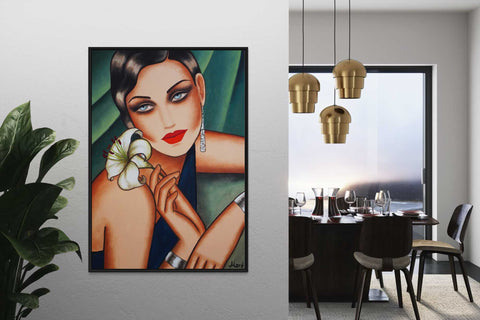
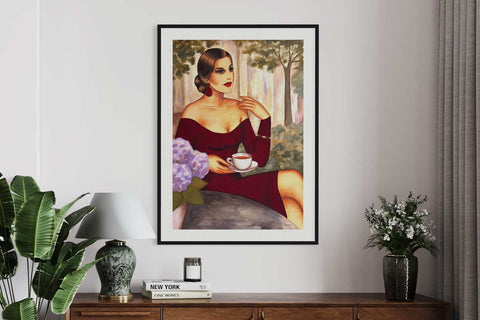
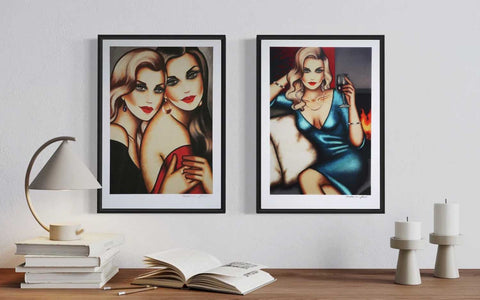
Art also holds a special position within this design language. High-quality original works pick up on the colors, materials, and proportions of the room and further develop its architectural idea. They thus become not only an eye-catcher but also a connecting element between interior design and atmosphere.
Botanical Luxury is therefore less a fixed style than a design philosophy. It combines the clarity of modern architecture with the vibrancy of nature and creates spaces that inspire enduringly.

2. Why Botanical Luxury is gaining worldwide importance
The fact that Botanical Luxury is increasingly found in boutique hotels, exclusive residences, and high-quality hospitality concepts is no coincidence. Our ideas of luxury have changed.
In an increasingly digital and fast-paced world, there is a growing desire for spaces that convey security, tranquility, and sensuality. At the same time, the desire for natural materials and authentic craftsmanship is increasing. Instead of fleeting trends, timeless design and durable quality are regaining importance.
This development is particularly evident in hospitality design. Hotels today want to offer their guests much more than comfort. They create places that remain emotionally in memory and possess their own identity. Atmosphere becomes a decisive competitive advantage.
The concept of Biophilic Design also contributes to this development. It deals with the question of how the connection between humans and nature can positively affect well-being, concentration, and recovery. Botanical Luxury picks up on many of these ideas but interprets them much more elegantly and luxuriously. The focus is not on lush greenery, but on a carefully composed combination of nature, architecture, and high-quality materials.
Parallel to this, the term Slow Luxury is also gaining increasing importance. It describes a luxury that does not arise from abundance but from quality, craftsmanship, and conscious design. This is precisely where Botanical Luxury seamlessly fits in: spaces appear calm and naturally high-quality, without being intrusive or overloaded.
This development also explains why original floral art is regaining focus today. It brings vibrancy to clear architecture, gives rooms personality, and creates an emotional connection that goes far beyond mere decoration.
I show in detail how this design philosophy can be implemented in the hotel industry and what role original floral art plays in this in the article "Original Floral Art for Hotels – Botanical Luxury between Art Déco and Modern Architecture".
Healthcare spaces also benefit from original floral art. You can learn more about the design of modern healthcare spaces in the article: "Art for Doctor's Offices and Clinics – How Healthcare Spaces Can Promote Trust and Well-being"

3. More than plants – the design elements of Botanical Luxury
Botanical Luxury is often associated with plants or floral patterns. In reality, this special atmosphere is created by the interplay of many design elements. Nature is the inspiration – not decoration.
High-quality materials play a central role. Natural stone, travertine, wood, brass, bronze, or handcrafted surfaces give rooms warmth and value. They age gracefully and often develop more character over time.
Color design is equally important. Instead of strong contrasts, harmonious natural tones dominate: warm sand and beige nuances, cream, dark wood, olive green, or deep blue and burgundy tones. Gold and brass set elegant accents precisely, without being obtrusive.
Light also contributes significantly to the effect. Natural daylight, indirect lighting, and gentle lighting schemes make materials appear alive and give rooms depth. Shadows are not avoided but deliberately used as a design tool.
In addition, there are organic forms, curved lines, and a balanced proportioning of the furnishings. Large windows, generous sightlines, and flowing transitions between architecture and nature create a feeling of openness and tranquility.
Botanical Luxury therefore does not arise from individual furnishing objects. It is the harmonious interplay of materiality, light, architecture, and nature that gives rooms their special atmosphere.
Even in art, gold surfaces can create light and spatial depth without being obtrusive. You can learn why this material has fascinated artists for centuries in the article "Florale Kunst mit Gold – warum Glanz Tiefe schafft" (Floral Art with Gold – Why Luster Creates Depth).

4. When architecture and nature speak the same language
Particularly high-quality interiors rarely look spectacular. Their strength lies in the fact that every detail is part of a larger composition. Materials, light, furniture, and art follow a common design idea.
This is precisely where Botanical Luxury unfolds its special effect. Architecture does not end at the wall – it continues in colors, shapes, materials, and finally in art. This creates a harmonious overall picture that appears natural and yet possesses a strong identity.
Original art can uniquely enhance this connection. It picks up on the proportions of a room, incorporates materials or color palettes, and continues the architectural language. The picture does not stand in isolation on the wall but becomes part of the entire room concept.
Especially in boutique hotels or high-quality living spaces, this creates a crucial difference. Instead of juxtaposing individual design elements, architecture and art merge into a common narrative. Rooms appear calmer, more sophisticated, and at the same time more personal.
Why art can so strongly influence our perception of a space and what role atmosphere plays in our well-being, I explain in detail in the article "Rooms with Feeling – How Art Creates Atmosphere".
This connection is one of the reasons why interior designers are increasingly considering original art in early planning stages. It is not understood as a retrospective decoration but as an integral part of the overall room design.
👉 Learn more about my art for hotels:
➤ To the article: "Art for Hotels – Original Art for Boutique Hotels and Hospitality Interiors"

5. Botanical Luxury and Neo Déco – why elegance is returning
In recent years, a remarkable development has been observed in interior design: After a long phase of cool minimalist concepts, the longing for more warmth, character, and craftsmanship is growing. At the same time, classic design elements of Art Déco are experiencing a modern renaissance.
This contemporary interpretation is often referred to as Neo Déco. It does not adopt the opulent ornamentation of the 1920s but translates its basic principles into a modern design language. Clear geometries, balanced proportions, noble materials, and finely placed metal accents give rooms a timeless elegance without appearing historical.
This is precisely where Neo Déco and Botanical Luxury naturally meet. Both rely on high-quality materials, careful craftsmanship, and a conscious design of every single detail. While Neo Déco brings structure, clarity, and elegance to the room, Botanical Luxury complements this language with organic forms and the vibrancy of nature.
The result is interiors that appear neither cold nor overloaded. They combine architectural precision with natural warmth and create spaces that seem modern without following short-lived trends.
This connection also explains why Botanical Luxury is particularly common today in boutique hotels, design hotels, and exclusive residential projects. Both design approaches pursue the same goal: to create spaces that not only look high-quality but also create an atmosphere that is remembered for a long time.
You can find out why Neo Déco is one of the most exciting developments in interior design today and why this style is a modern interpretation of Art Déco in the article "Neo Deco – The New Elegance between Art, Space and Time".

6. Original floral art as part of high-quality interior architecture
In many projects, art is only created at the very end. The architecture is in place, the furniture is selected, and now the wall needs to be "filled."
I believe that much potential is lost this way. Art has the potential to give a room an identity. Therefore, it is worth considering it not just at the end of a project, but from the beginning as part of the overall concept.
Modern flower paintings, in particular, achieve their greatest effect when they are not viewed in isolation, but are part of a well-thought-out room concept.
Original art can shape a room far more than individual pieces of furniture. It determines sightlines, sets emotional focal points, and often influences the atmosphere more strongly than one might initially assume. Therefore, it should not be understood as decoration, but as part of the overall design concept.
When selecting original art, one should therefore not only pay attention to the motif but also to material quality, craftsmanship, and spatial effect. I explain what matters in the article "Buying Abstract Floral Art – How to Recognize Quality".
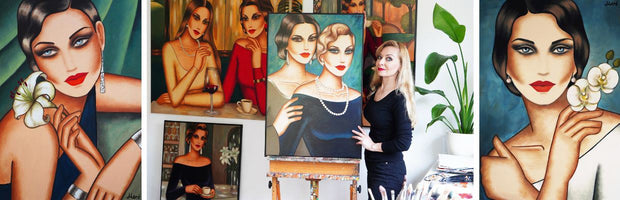
For many years, I have been concerned with the question of how art and architecture can interact. I am less interested in the individual motif than in the effect of the entire room. How does light change a picture? Which materials pick up on its color palette? How does harmony arise without everything looking the same?
From this exploration, my own visual language Floral Glamourism developed. It combines botanical forms with architectural clarity, geometric compositions, and a modern interpretation of Neo Déco. Gold surfaces, light, lines, and floral elements do not stand side by side but form a common visual language.
This creates works that are not only viewed but also help shape the character of a room.
Floral Glamourism is my personal artistic interpretation of Botanical Luxury. You can find out what ideas are behind this visual language and what distinguishes it in the article "Floral Glamourism – The Poetry of Floral Forms between Art Déco and Eternity".

7. Botanical Luxury in Hotels, Spas, and Exclusive Living Spaces
Botanical Luxury unfolds its effect wherever people come to rest for a moment, enjoy, or find new inspiration. Precisely for this reason, this design language is increasingly encountered today in boutique hotels, exclusive spa areas, and high-quality residential interiors.
In a hotel lobby, large-format original art often creates the first emotional impression. Even before a guest checks in, they subconsciously begin to perceive the character of the establishment. Art can convey elegance, arouse curiosity, or create a special atmosphere.
In restaurants, wine lounges, or libraries, floral original art also supports the identity of a place. It creates focal points, connects different materials, and gives rooms an individual signature that remains in memory.
In spa areas, on the other hand, different demands arise. Here, it is less about attention and more about balance. Organic forms, harmonious color schemes, and a calm composition can support the feeling of relaxation without dominating the space.
Botanical Luxury has a similar effect in high-quality doctor's offices and waiting areas. Natural materials, calm color palettes, and floral original art can help create a relaxed atmosphere.
Read more about this in the article "Art for Practices & Waiting Rooms – how floral originals promote well-being."
Even in private living spaces, Botanical Luxury develops a special effect. Here, no hotel backdrops are created, but personal retreats. High-quality original art, in particular, can give these rooms an individuality that is difficult to achieve with industrially produced decoration.
Perhaps that is one of the biggest differences between decoration and art: decoration complements a space. Original art gives it personality.
I illustrate how large-format original art can shape lobbies, spas, restaurants, or hotel suites with numerous visualizations in the article "Floral Original Art for Hotels."

8. Why Floral Art is Far More Than Decoration
Flowers have accompanied humanity for millennia. They represent growth, change, transience, and new beginnings. Hardly any other motif so naturally connects beauty and time.
Perhaps that is why floral motifs still touch us so directly. They remind us that all living things mean change. Every season brings new colors, every blossom has its own moment – and precisely its transience makes it precious.
However, I am not fascinated by flowers as botanical studies. I see a language in them. Perhaps that is why floral motifs appeal to people across cultures and generations. We often understand their symbolism intuitively – even without being able to consciously name it. They speak of strength and vulnerability at the same time. Of elegance that never has to be loud. Of a beauty that does not have to be perfect to touch.
That is why my floral works are not created as lifelike depictions. They are interpretations. Architecture, light, gold, and organic forms merge into compositions that show less of the individual plant than the feeling it can evoke in us.
Perhaps that is precisely the task of art: not to give answers, but to create resonance. Rooms gain not only aesthetics but also depth. They invite one to pause for a moment – and precisely these moments often remain in memory the longest.

9. Botanical Luxury as a Timeless Design Philosophy
Every interior trend tells something about its time. Some disappear after a few years. Others evolve and remain because they respond to fundamental human needs.
I believe Botanical Luxury belongs to the second group.
Because ultimately, it's not just about plants, gold, or high-quality materials. It's about the desire to create spaces that combine security, elegance, and vibrancy. Spaces that don't want to impress, but to touch.
Especially in a world that is becoming faster and more digital, the longing for places with character is growing. For materials that one likes to touch. For light that radiates warmth. For art that does not have to be loud to have a lasting effect.
Perhaps this is the true luxury of our time: consciously designed spaces that do not flaunt beauty, but make it experienceable.
Botanical Luxury is therefore far more than an interior style. It is an attitude that connects architecture, nature, and art – and creates spaces that appeal to people as well as their senses.
Concluding Thought
Perhaps this explains the growing importance of Botanical Luxury.
The more technical and faster our world becomes, the greater seems to be the longing for spaces that combine naturalness, elegance, and sensuality.
Not as a retreat from modernity.
But as a conscious complement.
Perhaps that is why Botanical Luxury is far more than an interior trend.
It reminds us that architecture, nature, and art can jointly create spaces where we not only stay – but truly arrive.
→ Non-binding consultation
info@ekaterina-more.com
FAQ - Frequently Asked Questions about Botanical Luxury
What is Botanical Luxury?
Botanical Luxury describes a modern design philosophy that combines nature, high-quality materials, and timeless elegance. Unlike purely decorative plant concepts, the harmonious interplay of architecture, light, materiality, and art is central here. Nature is not simply placed in the room but consciously integrated into the design. This creates interiors that are simultaneously luxurious, calm, and vibrant – an aesthetic particularly appreciated today in boutique hotels, high-end living spaces, and exclusive spa areas.
Why is Botanical Luxury becoming increasingly popular?
In an increasingly digital and fast-paced world, there is a growing longing for spaces that convey comfort, naturalness, and quality. At the same time, our understanding of luxury is changing. Instead of abundance, high-quality materials, craftsmanship, and consciously designed atmospheres are now central. Botanical Luxury combines precisely these values and creates spaces that radiate calm without appearing boring. Therefore, this design approach is increasingly found today in boutique hotels, design hotels, exclusive residential projects, and high-quality hospitality concepts.
How does Botanical Luxury differ from the Urban Jungle style?
Although both design directions are inspired by nature, they pursue different goals. In the Urban Jungle style, numerous houseplants, strong green tones, and lush vegetation are often central. Botanical Luxury, on the other hand, interprets nature in a much more elegant and refined way. High-quality materials such as travertine, natural stone, wood, linen, velvet, and accents of brass or bronze, harmonious color schemes, and selected botanical elements create a luxurious atmosphere that appears timeless and consciously integrates architecture.
Why does Botanical Luxury seem so harmonious?
The special effect is created not by individual plants or colors, but by the balanced interplay of many elements. Natural materials, warm lighting moods, organic forms, and carefully coordinated proportions create an atmosphere that is calm and at the same time high-quality. Nothing pushes itself into the foreground. Precisely this balance makes Botanical Luxury so pleasant and makes rooms appear lastingly elegant.
What materials and colors characterize Botanical Luxury?
Typical are high-quality natural materials such as travertine, natural stone, wood, linen, velvet, as well as accents of brass or bronze. The color palette is based on natural tones: cream, sand, greige, warm brown nuances, olive green, or deep blue form a calm foundation. Gold is usually used sparingly and emphasizes elegance without being dominant. Together, these materials create an atmosphere that is luxurious and at the same time timeless.
What role does art play in Botanical Luxury interiors?
Art connects architecture, materials, and atmosphere into a common visual language. It not only complements a room but can decisively shape its identity. Original art, in particular, creates individuality and lends personality to high-quality interiors. It sets emotional accents, creates focal points, and helps rooms remain in memory for a long time. Especially in boutique hotels or exclusive residential projects, art is therefore increasingly understood as an integral part of interior design.
What kind of art suits the Botanical Luxury style?
Original works that do not simply depict nature but artistically interpret it are particularly harmonious. Organic forms, balanced compositions, high-quality materials, and a timeless color scheme usually fit better into Botanical Luxury than decorative posters or lifelike floral illustrations. The decisive factor is that art and architecture engage in dialogue and together create a coherent atmosphere.
Does Botanical Luxury also suit modern apartments and boutique hotels?
Yes. Botanical Luxury can be implemented in private living spaces as well as in boutique hotels, design hotels, spa areas, or exclusive restaurants. The decisive factor is not the size of a project, but the quality of the design. Even individual materials, thoughtful lighting design, and selected original art can give a room this special atmosphere.
How does Floral Glamourism combine Botanical Luxury with Neo Déco?
Floral Glamourism is my personal artistic interpretation of Botanical Luxury. Floral forms merge with the clarity of modern architecture, geometric compositions, and the elegant design elements of Neo Déco. Gold, light, and organic structures form a common visual language that appears timeless and harmoniously integrates into high-quality interiors. This creates works that do not copy nature but translate its beauty and vibrancy into a modern, architectural form.
Why does Botanical Luxury appear timeless and not like an interior trend?
Many interior trends thrive on short-term effects. Botanical Luxury, on the other hand, is based on principles that have endured for centuries: natural materials, balanced proportions, craftsmanship, and the close connection between humans and nature. Precisely these elements hardly age. Rather, they develop character over time and give rooms an elegance that endures independently of changing fashions.