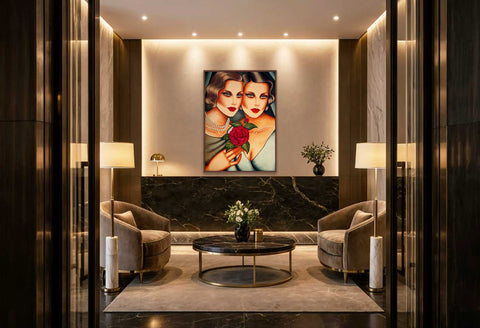
I remember a small boutique hotel in Hamburg, not far from HafenCity. It wasn't a spectacular luxury hotel. And yet, to this day, I feel happy every time I think of it.
Quiet classical music, a subtle fragrance, warm morning sunlight, and a special tranquility made this place unforgettable. Whenever I traveled to Hamburg, I was drawn back to that very spot.
Only later did I realize that it wasn't a single detail that touched me, but rather the interplay of many small things. Architecture, light, materials, hospitality, and atmosphere all told the same story.
That's precisely why boutique hotels have fascinated me for many years.
They don't just sell an overnight stay. They create places that you remember.
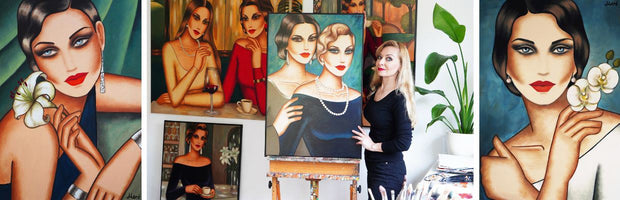
As an artist, I have been exploring for over 25 years how images affect spaces. I believe that exceptional boutique hotels possess more than just successful interior design. They have their own identity. And original art can help make this identity visible.
If you are generally interested in how individual art concepts for hotels are developed, you can find more about lobbies, suites, restaurants, spas, room visualization, and project timelines in my main article "Art for Hotels" .
This article specifically addresses why individual original art can play such an interesting role, especially for boutique hotels.

1. Why some boutique hotels become favorite places
Everyone knows places they want to return to again and again.
Sometimes it's a small cafe. A garden. A vacation home. Or a boutique hotel.
Surprisingly, we often don't remember every detail of the decor later. What remains is more of a feeling.
Perhaps it was the warm light in the evening, the friendly greeting at reception, the scent in the entrance area, or breakfast in a special spot. Perhaps it was the tranquility in the room or simply the feeling of stepping out of everyday life for a few days.
Especially small, individually run hotels can combine such impressions particularly well. Architecture, light, materials, music, plants, and hospitality ideally form not just a collection of beautiful details, but a world of their own.
I believe that today we particularly long for such places. Many people experience their everyday lives as fast-paced, stressful, and full of stimuli. A hotel can become a counterpoint for a few days: a place where you slow down and look more closely again.
Original art is not automatically the focal point.
But it can be an important detail.
A work can make a room warmer, more exciting, or more distinctive. It can pick up a thought already present in architecture or landscape and carry it further on another level.
Perhaps that is precisely the difference between a beautiful hotel and a favorite place: you don't just remember what it looked like, but how you felt there.

2. Why original art can make boutique hotels distinctive
Boutique hotels thrive on personality.
They usually want to avoid appearing like an interchangeable standard concept. Their strength lies in their unique signature: in special materials, unusual architecture, a regional connection, or an atmosphere that consciously distinguishes itself from other establishments.
Original art can support this individuality.
A hand-painted work possesses a surface, depth, and presence that cannot be fully reproduced. Textures, brushstrokes, color overlays, or metallic surfaces change depending on the light and viewing angle. Each work remains a unique piece.
My interest is not simply in filling an empty space on the wall.
I find the question much more exciting:
What does this place already possess – and what could art add?
Sometimes a very calm interior needs a strong visual accent. Sometimes the exact opposite would be right, and the art should carefully continue the existing atmosphere.
Even a single work can become a visual anchor. Guests see it upon arrival, encounter it again later, and eventually associate it with this place.
With multiple paintings, an entire visual world can emerge.
However, it is always important to me that the art remains art in its own right. It may relate to architecture and atmosphere, but it should not simply repeat colors, fabrics, or furniture within the painting.
What original art can achieve in a boutique hotel
-
Support a unique visual signature
-
Connect spaces
-
Create special focal points
-
Expand upon the history of a building
-
Surprise guests and invite contemplation
-
Strengthen the recognizability of a place
Precisely herein lies a special opportunity for boutique hotels: art does not have to function universally for as many establishments as possible. It can become part of this one specific place.

3. Every boutique hotel tells its own story
For me, an interesting art concept doesn't begin with the question of which picture fits on a particular wall.
First, I want to know:
What story does this hotel tell?
Some hotels are very strongly connected to their landscape. Others are located in historic buildings. Some thrive on an urban, almost theatrical atmosphere, while others rely on tranquility, nature, and reduction.
These differences can be a starting point for art.
A boutique hotel on the Moselle, for example, could capture the atmosphere of the wine landscape without realistically depicting vineyards. I might be interested in organic grapevines, leaves, warm green tones, and the light of a late summer.
On the coast, it might be grasses, bright surfaces, wind, and the special light between sky and sea.
In a Mediterranean hotel, lemons, olive branches, or other plants could become motifs – not as a tourist illustration, but as part of an independent visual language.
A historic building, on the other hand, might not need any regional plant reference at all. There, the contrast between old architecture and contemporary art could be particularly interesting.
That's why I don't believe in ready-made recipes for "hotel art."
A boutique hotel has its own story. For me, the task of art is not to copy this story, but to bring it to a new level.
Architecture, landscape, and art can relate to each other without looking alike.
This is precisely how character is created.
➤ To the article: "Feminine Glamourism – Women's Portraits for Boutique Hotels"

4. Two visual worlds for different boutique hotel concepts
In my work, there are two visual worlds that can have very different effects in hotels.
Floral Glamourism – Nature, tranquility, and organic forms
My floral works stem from a fascination with plants, growth, and natural structures.
I don't paint botanical illustrations, however. I am more interested in organic forms, color fields, movement, and the tension between conscious composition and what develops during the painting process.
Floral original art can be particularly suitable for hotels where nature, tranquility, and deceleration play a role: for spa and wellness areas, retreats, resorts, or establishments that work with wood, natural stone, linen, and calm materials.
Especially in clean interiors, the organic design language can create a beautiful counterpoint.
You can find more about this style in my article "Floral Original Art for Hotels - Botanical Luxury for Boutique Hotels"

Feminine Glamourism – Personality, presence, and staging
My women's portraits have a completely different effect.
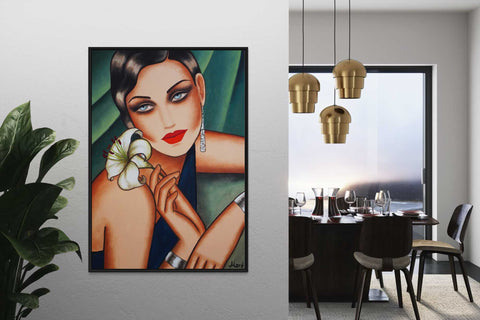
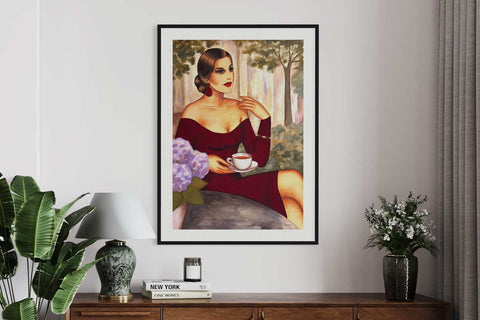
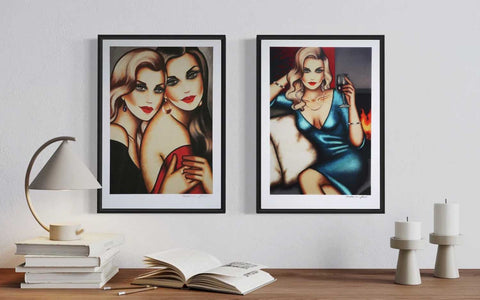
They are stylized, clear, and often characterized by a modern Art Deco feel. The women depicted are not portraits of specific individuals. Rather, they represent a certain attitude: self-confidence, elegance, sensuality, and joy of life.
Such works are particularly suitable for areas where art can show more presence.
I'm thinking of hotel bars, lounges, restaurants, reception areas, or special suites.
In interiors with dark wood, brass, velvet, natural stone, or strong colors, women's portraits can become characteristic focal points.
You can find more about this in my article "Women's Portraits for Boutique Hotels and Art Hotels".
Both visual worlds pursue the same goal, yet they do so in completely different ways.
One works more with nature and organic forms.
The other with figure, gaze, and personality.
Which direction fits better does not depend on a style rule, but on the character of the establishment.

5. Which visual styles suit different boutique hotels
Every boutique hotel has its own identity. Therefore, a suitable visual style does not arise from a fixed scheme, but from the architecture, landscape, light, and character of the hotel.
I'm not just interested in the decor. I rather ask myself: What atmosphere should guests experience? And what memory should they take home with them?
The following examples show how original art can respond differently to a hotel concept.
Boutique Hotel on the Moselle
Between vineyards, slate slopes, and historic town centers, an atmosphere of tranquility, enjoyment, and the seasons is created.
A floral visual world could capture this feeling without directly depicting the landscape. Organic grapevines, abstracted leaves, warm golden tones, and the light of a late summer tell of ripeness, time, and nature. This creates a connection between the surroundings and the interior.

Spa & Wellness Hotel
In spa and wellness hotels, guests primarily seek peace and deceleration.
Large-format floral paintings with soft color palettes, organic structures, and shimmering surfaces can support this mood. The art here does not have to be an eye-catcher at all costs, but can be a silent companion to relaxation.
Design & Lifestyle Hotel
Design hotels thrive on clear architecture, special materials, and a distinctive interior concept.
Here, art can also assert itself more confidently. Large-format original paintings can create deliberate accents and become part of the overall architectural idea.

Boutique Hotel in Neo-Deco Style
Brass, natural stone, velvet, dark woods, and sculptural lighting create an elegant atmosphere of timeless modernity.
Here, both floral compositions with clear forms and expressive women's portraits can work very well. The art captures the value of the interior without simply repeating its shapes or colors.
Adults-Only Boutique Hotel
Adults-only hotels often combine tranquility and elegance with a special lifestyle.
Iconic women's portraits from my Feminine Glamourism collection can create striking focal points in the lobby, lounge, or hotel bar. They bring personality to the space and are particularly suitable for hotels that consciously work with staging and a strong visual identity.
Historic Boutique Hotel
Whether a city villa, manor house, or former castle – historic boutique hotels thrive on their history.
Original art does not have to illustrate this past. I find the dialogue between historic architecture and contemporary painting more exciting. This can create something new without overshadowing the character of the house.
Boutique Hotel in the Mountains
Alpine boutique hotels combine nature, comfort, and high-quality materials. Old wood, natural stone, and large windows already bring the landscape indoors.
Floral original art with green, cream, and gold tones can capture this mood without directly depicting mountain panoramas. Abstracted plant forms might evoke wildflowers, alpine meadows, or the tranquility of nature.
Boutique Hotel by the Sea
On the coast, light, expanse, and proximity to nature define the way of life.
For me, this isn't about maritime decoration. More exciting are lightness, bright color harmonies, organic shapes, and an imagery that continues the openness of the place.
You can learn more about this approach in my article "Floral Original Art for Hotels – Botanical Luxury for Boutique Hotels & Design Hotels."
Each of these examples shows that art for a boutique hotel is not created according to a fixed recipe. The character of the hotel, its architecture, and the experience guests are meant to have are crucial.
That's why an art concept for me always begins with listening – not with selecting a picture.
I would clearly prefer this version over the condensed three-item version. The diversity of examples makes the chapter highly engaging and very illustrative, without descending into a general project process.
More on this: "Floral Original Art for Hotels - Botanical Luxury for Boutique Hotels"

6. Some Thoughts from My Studio
For many years, I've noticed that some rooms are perfectly furnished yet remain astonishingly still.
Everything is just right.
And yet, something is missing.
Perhaps it's because personality cannot be fully planned.
A room starts to become interesting to me when it shows traces of individuality: an unexpected material, a special piece of furniture, a plant, a work of art, or a story that wouldn't work everywhere.
Even when painting, the most exciting moments don't always arise from control.
Colors bleed into each other. Textures change. Metallic surfaces react to light. Some decisions only emerge during the painting process.
Perhaps this combination of planning and freedom is also important for rooms.
A good boutique hotel needs a concept.
But it also needs things that don't look like they were chosen exclusively from a checklist.
Original art can become interesting precisely there.
Not because it perfectly matches the sofa.
But because it adds something unique to the room.

FAQ – Frequently Asked Questions about Original Art for Boutique Hotels
What role can original art play in a boutique hotel?
Original art can support a hotel's identity and give it a unique visual signature. It can accentuate individual rooms, connect different areas, or become part of the overall hotel concept as a recurring imagery.
Why is original art particularly suitable for boutique hotels?
Boutique hotels generally thrive more on individuality and personality than standardized hotel concepts. An original is a unique piece and can therefore be very well suited to establishments that deliberately wish to develop a distinctive character.
How does art for boutique hotels differ from art for classic business hotels?
In boutique hotels, the individual atmosphere of the establishment often plays a more central role. Art there can be more personal, unusual, and more strongly connected to the history of the place. In classic business hotels, more universal and understated solutions often play a larger role.
What kind of imagery is suitable for boutique hotels?
That depends on the character of the hotel. Floral original art can focus on nature, tranquility, and organic forms. Women's portraits, on the other hand, can create stronger visual accents and work particularly well in bars, lounges, or representative areas.
Can original art also be integrated into an existing boutique hotel?
Yes. Especially during renovations or a new positioning, art can be a relatively targeted way to give an existing interior a stronger identity without having to redesign the entire space.
Can original art become part of a boutique hotel's brand identity?
Yes. Especially when individual works or a coherent series of images remain permanently associated with the hotel, they can become a recognizable part of its visual identity.

Conclusion – when a hotel remains more than just a beautiful space
The most beautiful boutique hotels aren't remembered because every detail was perfectly planned. They are remembered because architecture, light, materials, hospitality, and small special moments come together to create a unique atmosphere.
Original art can be a part of that. It doesn't just add color to a room, but character – through an imagery that fits the history of the hotel yet remains distinctive.
Perhaps that's what's ultimately crucial: we rarely remember individual pieces of furniture. We remember how we felt in a place.
Are you already planning a specific hotel project? In my main article "Art for Hotels" you can find out more about existing originals, commissioned works, image series, space visualization, and the project process.
If you'd like to check which of my works might suit your boutique hotel, feel free to send me room photos, renderings, or initial information about your project.
I look forward to your non-binding inquiry.
👉 Contact me: info@ekaterina-more.com