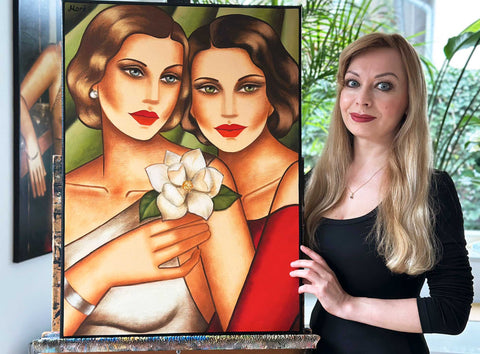
Idealized Images of Women
You look in the mirror and once again feel not good enough. The post from a famous influencer in the Maldives at a chic hotel comes to mind. Suddenly, you realize: The fault for not feeling good enough lies with the images of flawless beauties that we encounter everywhere – on Instagram, in advertising, on billboards. The media, the stars, the influencers – they are to blame for my dissatisfaction with myself. But is it really that simple?
"You are good just the way you are." We hear these words more and more often. Body positivity and self-love instead of body worship are the trends of today. At first, it sounds promising, but then dissatisfaction often remains. Why? Why do so many women, despite these positive messages, still feel so dissatisfied with their appearance? Was it all for nothing?
Even as a little girl, I often asked myself: "Am I beautiful enough?" At six, I was too small and too thin. And I didn't feel truly beautiful. At seven, I had to wear glasses. Ugly glasses? Never! I'd rather struggle through the world with blurry vision, which often seemed blurred and restless to me – just like my inner feelings.
As an artist, these questions never left me. And now, after many years of artistic and psychological engagement with the topic, the realization came: The idealized images we see are not just superficial. They have a deeper meaning. They are archetypal images that influence us all and serve an important purpose.
What are archetypal images?
C.G. Jung discovered that certain images exist within all of us, which are like primordial patterns and are consistent across all cultures worldwide. Mother, child, hero, growth, life, death – there are countless archetypes that not only operate in our psyche but are also found in fairy tales and legends. The same applies to the archetype of a beautiful woman, a goddess, which works deeply within us as an idealized representation. And even if beauty ideals differ from culture to culture and can change over time, idealized images persist in the collective unconscious. Already in ancient Greece, countless artists depicted idealized beauties, heroes, goddesses, and gods in their artworks. And even if in our often meaningless time, contemporary art seems to have turned away from beauty, the inner search for it intensifies.
The Power of Inner Images
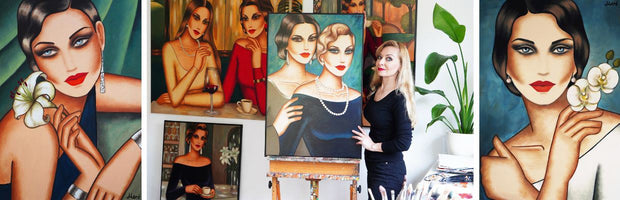
Since my childhood, inner images of female beauty have accompanied me. They have helped me through difficult times, often guided me, and helped me become who I am today. The mother, the daughter, the warrior, the companion, the healer, the lover, the artist... These beautiful inner images that I perceive, I repeatedly try to bring to canvas. I also recognize these figures in books, films, and existing artworks. And I also recognize these figures of divine femininity in the women I meet. Often, I experience women denying this beauty within themselves. I would be happy if more women would discover and unfold this power within themselves. Outwardly, it's not about portraying oneself as someone else, but about emphasizing one's own strengths. But above all, it's about increasingly recognizing one's deep-seated strengths and unfolding inner beauty.
On the curse of being an attractive woman.
Do beautiful people really have an easier life? Many women who benefited greatly from their beauty in their younger years suddenly face a turning point: "If youthful beauty fades, what will be left for me?" For many, it becomes a great drama. They desperately try to preserve their youthful beauty at any cost. It often seems grotesque when women frantically try to restore their youthful appearance with Botox and similar methods. But the most important question often remains unanswered: Who am I beyond this external beauty? What can I build on? And how can I develop the inner beauty that is much more powerful and important?
Recently, I was out for a walk with a friend. We reminisced about the times when our daughters were small. We were so young and good-looking then, but why didn't we feel truly beautiful? My friend said, "Today, with a few extra pounds and a few wrinkles on my face, I am much more content and happy." I believe that with increasing maturity, one understands that beauty is something to be enjoyed. The world then unfolds its beauty – in nature, in encounters, in a delightful afternoon in the city with a friend having a pleasant conversation. Beauty itself then brings great joy – in observing the youthful beauty of our daughters and other women, the beauty in art, and also in experiencing the unfolding of the divine beauty of a person who manages to bring their inner beauty to the outside.
Thus, it becomes clear that true beauty lies not only in outward appearance but, above all, in radiance and contentment. Outer beauty may be fleeting, but inner beauty, which arises through maturity and life experience, is of lasting significance. Ultimately, beauty becomes a blessing if we learn to appreciate and enjoy it in all its facets.

Idealized Images in My Work
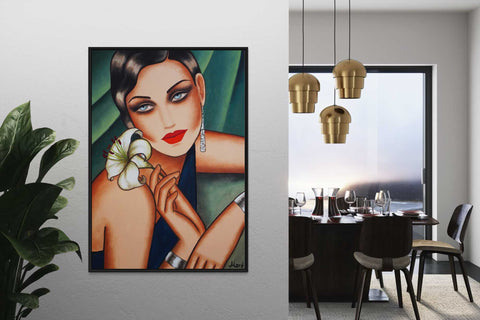
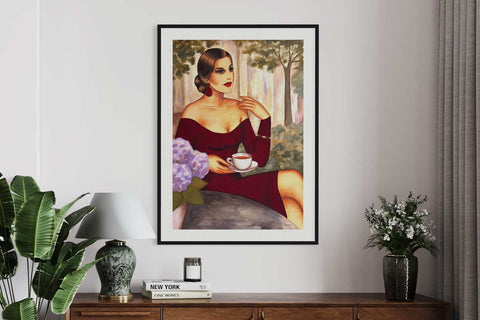
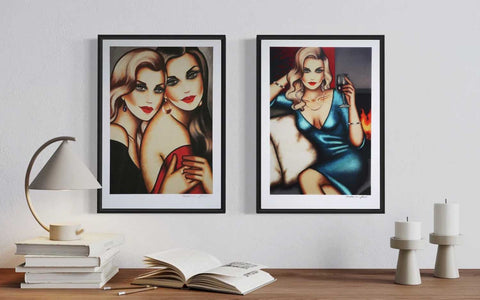
Through my art, I want to enable people to engage with inner images of female beauty. For me, my art reveals the magical power of femininity. Each time I try to bring the beauty of inner images to the canvas, I come into contact with the divine feminine power that exists independently of current trends and clichés. My art is an invitation to those who are drawn to this power and are ready to realize it in their own lives.
Idealized beauty has its place in our inner and outer world. It inspires us to do our best and to develop further. However, it is important to find balance and to cultivate inner beauty as much as outer beauty. Only then can we create a healthy relationship with ourselves and live truly content and fulfilled lives. And unfold the vibrant divine power of beauty within us.
For the detailed article about my art: "My Artistic World: Femininity, Aesthetics, and the Positive Energy of Images of Women."