1. What is femininity?
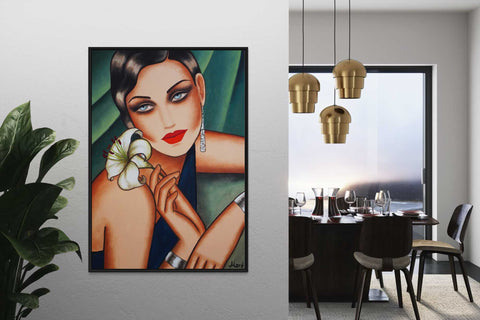
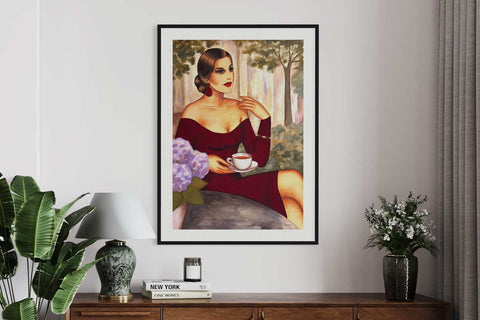
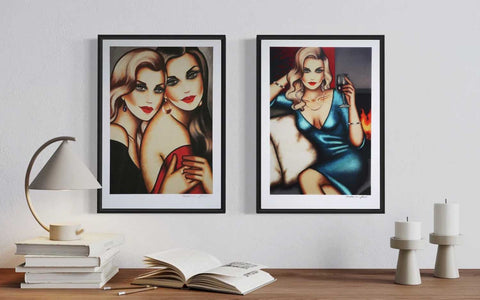
This question has accompanied me for over 25 years – in my paintings and photographs, conversations and personal encounters. For me, femininity is not a rigid role, but a living expression of inner truth: sometimes powerful, sometimes delicate, sometimes enigmatic.
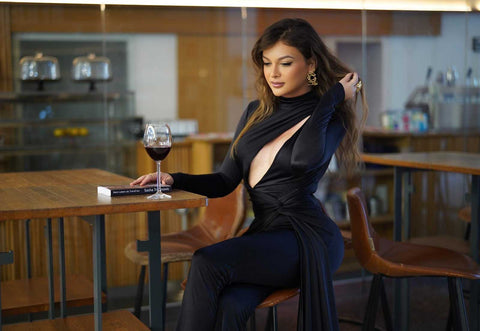
Recently, I met Sasha, a trans woman whose story deeply moved me. We did a photo shoot together – or rather, a photographic walk through Düsseldorf. Amidst old town alleys and street cafes, over espresso and red wine, we not only created a series of expressive portraits, but also had a conversation about identity, shame, staging, and the courage to be oneself.
This conversation broadened my perspective – not because Sasha isn't a biological woman, but because she dared to become completely herself. Femininity – I realized once again that day – is not what you should be, but what you feel. A quiet, profound dialogue about womanhood – in all its vulnerable strength.

2. Sasha – The Quiet Strength of a Woman
Sasha was born a boy in Serbia and grew up in Germany. Even as a child, she felt "different" – she preferred playing with dolls, moved gently, behaved more like a girl. For her parents, this wasn't an issue at first. But at school, she became a target. In swimming class, she had panic attacks, in the changing rooms she was insulted, spat at, ostracized. Teachers looked away, classmates laughed. "I just wanted to be invisible," she told me in a quiet voice.
Things also became more difficult at home when, at 17, she initially came out as homosexual. This was followed by control, pressure, isolation. Sasha ran away, returned, tried to fight for her place – and left school as a deeply insecure person.
When we met, I knew nothing of this. I saw an elegant, self-assured woman, with a calm gaze that had seen more than words could express. We walked through Düsseldorf, stopped at cafes, talked about femininity – and I wondered: Will you feel in these images the femininity that often becomes visible in my art?
Perhaps you can. Perhaps you feel it in this quiet, unyielding strength that Sasha radiates – without having to explain it.
You can learn more about Sasha in her biography:
To the book page on Amazon → "

3. What is femininity – for her, for me, for us?
I have painted many women – women in vibrant colors, in sensual moments, in thoughtful strength. And yet I keep asking myself: What is femininity really? Is it a body? An attitude? An emotion?
Sasha gave me an answer that deeply moved me. "I used to think femininity was makeup, long hair, a skirt. Today I know: it's the way you feel." Her voice softened as she spoke of her mother – of unconditional care, of empathy, of love that doesn't judge. "I always identified with female emotion," she said. "With the ability to feel deeply and still remain strong."
For Sasha, femininity was never a game – it was a truth she had to fight for. The right to wear makeup, to have a feminine walk, to be addressed as a woman, did not mean luxury for her, but self-connection. Not just to be seen – but to finally be herself.
And me? Through her, I understood that many of my paintings were perhaps attempts to give a face to this inner femininity. Not the perfect woman, but the feeling one. The searching one. The quietly rebellious one.
Perhaps femininity is not a state, but a question of how we live it – each in our own way. Not loudly, not definitively. But with glances, gestures, decisions. And sometimes with the decision, despite all fear, to say: This is who I am. This is how I want to live.

4. The role no one wrote
Many women today live in roles that they may have once chosen for themselves – but eventually realize no longer suit them. Wife, mother, career woman, pretty one, strong one, conforming one. They play these roles – sometimes masterfully – and yet notice: Something is being lost. Not because the role is wrong, but because it has changed. Or we ourselves have changed.
Because between function and feeling, a space sometimes arises where one's own female identity barely finds a place anymore.
Sasha knows this feeling in a more radical way. She not only had to deal with expectations – but with the deep prohibition of even being allowed to live a female role.
"I was never allowed to just be myself," she told me. "I always had to explain myself. Justify myself. And endure all of it."
It wasn't a sudden liberation, but a long, arduous process. Step by step, she learned to allow herself what felt right internally: to wear makeup, to be soft, to be seen – without masquerade, but also without apology.
I believe this is the question every woman asks herself at some point in life:
What if what I do no longer aligns with who I am?
Sometimes this happens in the morning in front of the mirror. Or when looking at a life that functions externally – but doesn't resonate internally.
Security can feel like a golden cage. And sometimes a ray of longing shines through the gleaming bars – delicate, but unmistakable.
Sasha decided to write her own role. Not to provoke – but to live honestly.
Perhaps that is the real power: not being different, but no longer playing by rules that were never one's own.

5. Emotion as female power
"For me, femininity primarily means emotion," Sasha said without hesitation. Not a pose, not a concept – but a deep inner feeling that is often overlooked in our loud, functional world. For her, being feminine means: empathizing, understanding, being patient without giving oneself up. It is not a weakness, but a quiet form of strength.
Sasha spoke warmly about her mother and sister – two women who showed her what lived femininity means. Not just through words, but above all through their attitude: loyalty, caring, the ability to love, even when it's difficult. "I felt this energy within me as a child," she said. "But I wasn't allowed to show it because it didn't fit the gender I was assigned."
In her current, emotionally lived femininity, Sasha feels something that goes far beyond external characteristics. It is an energy that connects rather than separates, that creates space rather than constricts. This very form of emotional femininity also touches me in my art. This femininity is deep, soft, honest.
Perhaps feminine power is not what we see. But what resonates within us – if we are willing to truly feel.

6. Femme Fatale & the fear of the free woman
The femme fatale – she fascinates, she irritates, she doesn't fit the image of the "good woman." She is beautiful, but not pleasing. She decides for herself what she shows – and what she keeps to herself. Her freedom seems like a silent threat to many. Because within her lives an unresolved issue of our society: the fear of female self-determination.
As I observed Sasha during our walk – how she moves, how she looks, how she is simply present – she reminded me of exactly this power. Clear. Alert. At peace with herself. And I wondered: Perhaps that is the real provocation – a woman who doesn't want to please, but simply is.
Sasha herself sees a parallel in the femme fatale: "This figure polarizes. And I know that I also polarize – not because I want to, but because I no longer hide." Her presence reminds us how many women have learned to make themselves smaller so as not to appear "too much."
But perhaps true freedom begins precisely where we stop apologizing for our own power.
You can find more about the archetype of the Femme Fatale in my article:
➤ To the article: "Forget Nice, Be Dangerous – The Power of the Femme Fatale"
7. Transformation – The Courage to Become Oneself
Transformation is a big word. We often think of radical upheavals, external changes, spectacular new beginnings. But real transformation begins quietly – with an inner yes. With the decision to no longer just function, but to feel. With the courage to listen to oneself, even if the answers are uncomfortable.
Sasha has crossed many such inner thresholds. Not all at once, not without fear. She spoke of how difficult it was to allow herself to be different. And of how long she suppressed her own needs just to belong somewhere. But eventually, a point came when she asked herself: What do I actually lose if I keep denying myself?
I believe many people – especially in midlife – know this quiet pain. This soft tug inside that says: There used to be more. The feeling of managing one's life rather than truly shaping it. But it's never too late to change something. Transformation doesn't have to be loud. It begins in a quiet space – somewhere between longing and decision.
Sasha took that step. Not to become someone else. But to finally be herself. Perhaps that is the deepest form of transformation: not becoming new – but coming home. To the person we always were – beneath all the layers of fear, adaptation, and expectation.
Do you want to learn more about female archetypes?
➤ To my YouTube series "Archetypes, Femininity & Art"
8. FAQ – Femininity, Transgender & the Quiet Rebellion of the Self
What does femininity mean for a trans woman like Sasha?
For Sasha, femininity is not a matter of makeup or clothes – but an emotional truth. She describes it as deep empathy, intuition, care, and the ability to lovingly accept herself and others. For her, femininity means: being allowed to feel. And shaping life from this depth.
Isn't being transgender just a trend today?
Sasha clearly says: No. Being transgender is not a lifestyle and not an Instagram phenomenon. It is an existential journey – often associated with loneliness, loss, and the courage to stand against societal expectations. The media hype may be loud. But the real experience is quiet, honest, and demanding.
Can one still change in midlife?
Especially then. Sasha made many of her most important decisions when others already thought: "Now it's too late." But that's a myth. Every moment you begin to take yourself seriously is the right moment.
Why is an artist like you concerned with this topic?
Because I have been exploring the topic of femininity for over 25 years – in colors, forms, encounters. Sasha was a mirror for me: for all that femininity can also be. Her story touches on what I want to show with my art – beyond roles, clichés, and labels.
What does femininity have to do with self-staging?
A lot. Femininity is often a conscious act of creation – sometimes sensual, sometimes vulnerable, sometimes provocative. Sasha doesn't play a role. She lives a truth that reinvents itself daily. Many women don't dare to stage themselves – for fear of being "too much." But precisely therein lies freedom: making oneself the main character in one's own life.
What does the Femme Fatale have to do with trans women?
Both stand for self-determination – and for the uncomfortable feeling that arises when women no longer apologize. The Femme Fatale embodies an archetypal shadow image of female power: dangerous, free, uncontrollable. Trans women like Sasha also embody this provocation – not through staging, but through their mere existence in their truth.
9. Conclusion & my invitation
This conversation with Sasha didn't instruct me, but touched me. It didn't give me a new definition of femininity – but opened up another perspective. One that doesn't demand, but asks. One that doesn't provoke, but makes palpable how diverse, deep, and individual femininity can be felt.
Perhaps this is precisely the path I want to continue on with my art and my texts: to meet people who don't conform to the norm, but find their own measure. Women who feel instead of trying to please. Women who understand themselves not as a role, but as a living process.
The conversation with Sasha was just the beginning. In the coming months, I want to portray more women – artists, thinkers, mothers, dreamers – and talk with them about what connects us: the longing to be ourselves – and to live femininity as it feels right for us.
If you recognize yourself in these questions, then continue this journey with me.
Do you want to learn more about femininity in my art?
➤ To the article: “Psychology of Femininity – The Art of Being a Woman”