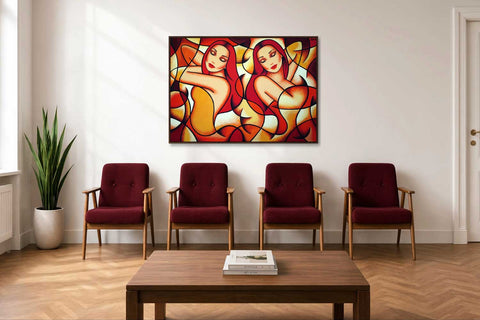
A gynecologist's practice accompanies women through the most personal moments of their lives. Pregnancy, desire to have children, preventative care, menopause, or difficult diagnoses – hardly any other medical field requires as much trust and empathy.
When furnishing or modernizing a gynecologist's practice today, one often first thinks of furniture, lighting, flooring, or medical technology. However, the impact of spatial design is often underestimated. Modern furniture, high-quality equipment, and bright walls alone do not create an atmosphere in which patients truly feel comfortable. Many gynecological practices, despite significant investment, appear cool, generic, or interchangeable.
In my experience, this is rarely due to a single piece of furniture or the wrong wall color. Much more often, a well-thought-out overall concept is missing. Colors, materials, light, and art are chosen independently of each other. Each component may function on its own – but together, they fail to create an emotional impact.
People intuitively perceive spaces. They do not consciously analyze why they relax or feel uncomfortable in a place. But within a few seconds, a first impression is formed: Does this room seem inviting? Does it exude quality? Does it convey peace and trust?
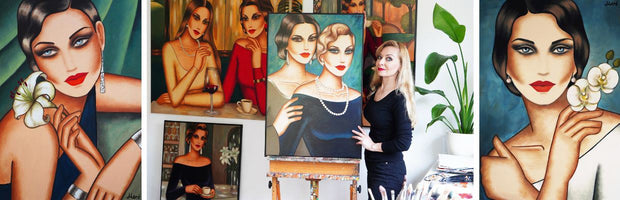
In recent years, I have had the privilege of accompanying several gynecological practices, private clinics, and aesthetic facilities with my art. In doing so, I have repeatedly observed similar design flaws. Many of these can be avoided with manageable effort – and precisely therein often lies the biggest difference between a functional waiting room and a practice that patients remember positively.

Error 1: Wrong colors – why simple color rules often don't work
"Green is calming."
Hardly any interior design tip is repeated more often than this. That's why many doctor's offices are dominated by garish green, blue, or yellow hues. The intention is good – but the result is often not.
Because colors never work in isolation. They always unfold their effect in interaction with light, materials, flooring, furniture, and their respective color intensity. A cool mint green under LED lighting can appear sterile. A dull gray-blue quickly conveys distance instead of security. Even elegant gray tones lose their effect when combined with the wrong types of wood or cold white.
The crucial question is therefore not:
Which color is calming?
But:
What atmosphere is created by the interplay of all design elements?
This is precisely where rooms with a design concept differ from rooms that have merely been furnished.
Two visual worlds – two different spatial effects
In my work, two distinct visual worlds emerge, consciously creating different atmospheres.
Flowism – life energy, movement, and optimism
Flowism works with flowing lines, harmonious color compositions, and vibrant dynamics. The colors blend into a harmonious whole, conveying lightness, hope, and joy of life. Especially in gynecological practices or fertility centers, this visual language can support a positive, confident atmosphere without appearing loud or restless.
👉 learn more about Flowism
Floral Glamourism – tranquility, elegance, and natural harmony
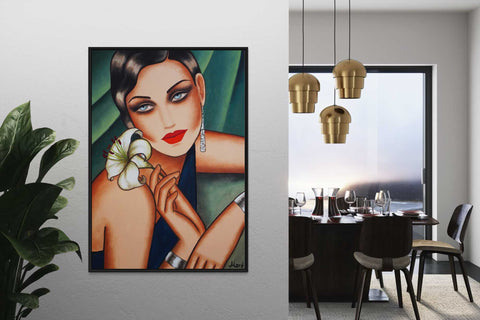
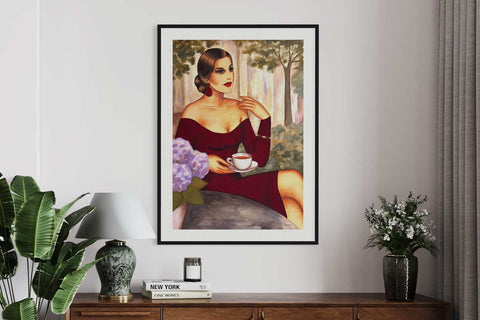
Floral Glamourism takes a different approach. Floral forms, natural color palettes, and the elegance of modern Art Deco create spaces that exude tranquility, value, and deceleration. This visual world is particularly suitable for private practices, aesthetic clinics, dermatology, or medical spas, where a high-quality ambiance is intended to underscore the character of the practice.
👉 learn more about Floral Glamourism
It's not the color that matters – it's the composition
Many practices search for the one "right" wall color or the perfect accent color. In fact, well-being only arises when colors, materials, light, furniture, and art speak a common design language.
A harmonious spatial effect cannot be achieved through individual color tones. It arises from a thoughtful composition – similar to a painting. Only when all elements are coordinated does a room develop that atmosphere in which patients feel welcome, safe, and well cared for.

Error 2: Pictures too small – when art disappears in the room
One of the most common mistakes in gynecological practices is surprisingly simple: the pictures are too small.
Often, a single picture measuring 50 × 70 cm hangs on a wall that is three or four meters wide. You immediately notice that something is missing. The room appears empty, even though there is art hanging there. The picture loses its presence and becomes more of a decorative detail than a central design element.
However, the correct proportion determines how a room is perceived. A large-format original can hold an entire waiting area together. It creates orientation, gives the room character, and naturally draws the eye.
It is not the number of pictures that is decisive, but their effect. Often, a single large work creates more calm and elegance than many small pictures that compete with each other.
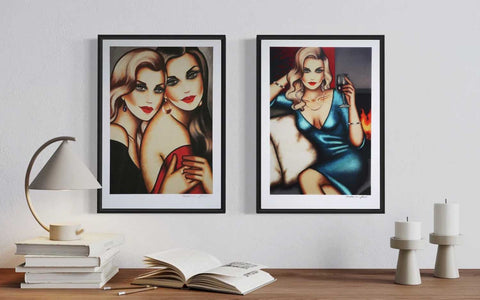
Multi-part works can also be a very harmonious solution. Diptychs or series can be flexibly adapted to the architecture and give long corridors or spacious waiting areas a clear design line.
The size of a picture should therefore never be chosen at random. It is an essential component of the overall room composition.

Error 3: Arbitrary art prints and hobby art instead of a clear visual language
Many practices invest a lot of time in furniture, flooring, or lighting. When it comes to art, however, decisions are often made spontaneously. A nice flower poster here, a landscape there, maybe an abstract painting from a local exhibition. Each work may appear appealing on its own – but together, they often lack a recognizable design direction.
In addition, art is often selected based on the criterion: "That looks nice."
But this is precisely where the difference between decorative pictures and professional art begins.
A convincing visual language does not develop by chance. Just as patients expect years of experience from a doctor, a professional visual language does not emerge overnight. It develops through continuous artistic work, reflection, and a clear design attitude. Behind it often lie many years of artistic work, an own philosophy, recognizable design elements, and a clear understanding of composition, color effects, and atmosphere.
This does not mean that hobby art or works by lesser-known artists are fundamentally worse. Many are created with great passion and deserve recognition. For the design of high-quality practice rooms, however, a single beautiful picture is often not enough. What is crucial is that all works speak the same design language and together form a coherent overall concept.
This is precisely why many professional artists develop an unmistakable signature over years. This gives rooms character and creates recognition – similar to good interior design or high-quality architecture.
Patients usually do not consciously perceive this design quality. However, they feel very clearly whether a room appears well-thought-out or rather accidental. And precisely this feeling often determines whether a practice is perceived as high-quality, trustworthy, and harmonious.

Error 4: When furniture, colors, and art tell different stories
A harmonious practice is not created by every single piece of furniture being high-quality. What is crucial is whether all design elements speak the same language.
This is precisely one of the most common furnishing mistakes.
The chairs come from the contract furniture supplier. The lights were suggested by the electrician. The flooring comes from the architect. Plants and pictures are added later – often independently of each other.
Each decision appears reasonable on its own. Together, however, no coherent overall picture emerges.
Patients do not consciously analyze these details. They merely sense whether a room appears harmonious or whether something doesn't fit together. This feeling arises within a few seconds – long before the first conversation begins.
Successful room design combines architecture, colors, materials, and art to create a common atmosphere. This is precisely what creates the tranquility and quality that many high-quality gynecological practices radiate.

Error 5: Too much decoration diminishes a room's impact
Waiting rooms, in particular, are meant to be friendly. That's why new elements are added gradually.
Plants.
Brochure stands.
Decoration.
Cushions.
Candles.
Small figures.
Several pictures.
Each individual object is meant to make the room more pleasant. Together, however, the opposite often occurs: restlessness.
The human eye seeks orientation. The more different focal points compete with each other, the more difficult it is to perceive a room as harmonious.
In my experience, high-quality practice rooms often appear so serene because they are consciously designed with reduction in mind. Less decoration does not mean less atmosphere. On the contrary.
A single large-format original can give a room significantly more personality than many small decorative elements. Art then takes on the emotional impact of the room – the furnishings can consciously recede into the background.
Precisely this reduction conveys tranquility, clarity, and value.

Error 6: Rooms without identity are not remembered
This point is, in my opinion, most often underestimated.
Why should a gynecologist's office feel exactly like every other office?
Gynecological practices, in particular, accompany women through many different life phases – from the first check-up to pregnancy and the desire for children, all the way to menopause. Each of these stages is associated with emotions, hopes, and sometimes worries.
I therefore find the idea that a practice can convey more than just medical competence all the more beautiful.
For the gynecological practice Asantae in Winterthur, a special art concept was therefore developed. The concept of the seven goddesses does not refer to mythology in a narrow sense, but to different qualities of female life – care, joy of life, change, strength, creativity, or inner peace. Especially in a gynecological practice, women repeatedly encounter these themes in different life phases. This creates a visual world with which many patients can intuitively connect.
Each work represents a unique aspect of womanhood. Together, they tell a story that weaves through the entire practice. Many patients initially perceive this symbolism intuitively. Some ask about it later. Others discover new details with each visit.
This, for me, is the difference between decoration and a well-thought-out spatial concept.
Art doesn't have to be loud. It doesn't have to explain everything either. But it can give a practice an identity that is remembered and makes visible the attitude of the people who work there.
👉 You can learn more about the Goddess concept in this article:
➤ To the article "The 7 Female Archetypes – Goddess Images as a Mirror of Your Soul"

Error 7: The emotional impact of a room is often underestimated
Most people will not remember the flooring of a practice years later. The color of the chairs or the shape of the lamps also fade over time.
What they do remember, however, is the feeling that a room conveyed.
Did I feel welcome?
Was I tense, or could I relax?
Did this place radiate trust?
Especially in a gynecologist's practice, these impressions play a greater role than many realize. Medicine treats the body. Rooms address feelings. Both together shape a patient's experience.
Good spatial design does not replace medical expertise. However, it can help patients orient themselves more quickly, feel more comfortable, and approach a practice with more trust from the outset.
This is precisely why it is worthwhile to view art not just as a decorative element, but as part of an atmosphere that emotionally connects with people. A successful work of art can momentarily divert attention from worries and tension and imbue the space with something that easily recedes into the background in medical everyday life: beauty, hope, and joy of life.
My Flowism works speak of movement, connection, and the strength to embrace one's own path. Dancing female figures represent vitality, change, and the confidence that different life phases are part of a larger whole. They convey lightness without being superficial and invite one to look forward again.
Floral Glamourism creates a different atmosphere. Floral forms, harmonious colors, and the elegance of modern Art Déco convey tranquility, value, and permanence. The images recall the power of nature – growth, renewal, and the fact that beauty often emerges where change is embraced.
Perhaps this is precisely where the special strength of art in a gynecologist's office lies. It not only guides patients through the space but also conveys an attitude: that femininity has many facets, that every life phase has its own value, and that a practice can radiate not only medical competence but also appreciation and humanity.
A practice treats illnesses.
A thoughtfully designed space can instill trust, convey confidence, and make people feel welcome.
And sometimes, precisely this feeling is the first thing one remembers later.
Learn more:
➤ To the article "Women's images for medical practices – Art for gynecology & aesthetics"
➤ To the article "Art for Practices & Waiting Rooms – how floral originals promote well-being"
FAQ – Furnishing and spatial effect in gynecological practices
What colors are suitable for a gynecological practice?
It's not the individual color that matters, but the interplay of light, floor, furniture, and art. Green, blue, or grey can have a calming effect – but if combined incorrectly, they can also appear cold, sterile, or restless. A harmonious color scheme that conveys trust and warmth is important.
Why do some waiting rooms feel uncomfortable despite modern furniture?
Often, a unifying design concept is missing. Furniture, wall color, light, plants, and pictures are chosen individually but don't speak a common language. This creates a space that is functional but not truly inviting.
What furnishing mistakes are particularly common in gynecological practices?
Commonly, these include cold color combinations, too small pictures, arbitrary art prints, too much decoration, and a lack of visual language. It is particularly problematic when the space does not convey a clear attitude.
Why are large pictures often more effective in the waiting room?
Large-format art gives the room a focal point. Small pictures quickly get lost on large walls and appear rather random. A large original can create calm, value, and orientation.
How can art strengthen trust in a gynecological practice?
Art unconsciously conveys whether a space has been lovingly, thoughtfully, and consciously designed. Especially images of women or original floral art can make appreciation, tranquility, and femininity visible – even before a conversation begins.
Should a gynecological practice be designed to be neutral or personal?
Neutrality is often mistaken for safety. A gynecological practice can be calm, professional, and personal at the same time. A clear visual language, in particular, can show that women are seen here not only medically but also humanly.
How can I enhance my practice with art without completely redecorating?
Often, a few targeted changes are enough: a large-format original, better placement, a clearer color concept, or a reduction of unnecessary decoration. Art can significantly change the character of a room without having to replace the entire furnishing.
You can find more about the design of modern healthcare spaces in the main article:
➤ To the article „Art for Medical Practices and Clinics – how healthcare spaces can promote trust and well-being"
My invitation
A gynecological practice is much more than a place of medical care. It accompanies women in special phases of life and can convey appreciation, trust, and security simply through its atmosphere.
Precisely for this reason, I view art not as a decorative addition, but as part of a well-conceived spatial concept.
Every gynecological practice tells a story as soon as you enter. The only question is: Which one? If you would like to redesign your practice or consciously develop individual rooms further, I would be happy to assist you in selecting suitable original works or develop an individual art concept with you – tailored to architecture, light, colors, and the desired effect.
Often, a few photos of your practice are enough to develop initial ideas and visualize different possibilities.
I look forward to creating spaces together where patients feel welcome, valued, and well cared for.
👉 Non-binding consultation:
👉 Discover my original works in the Online Gallery