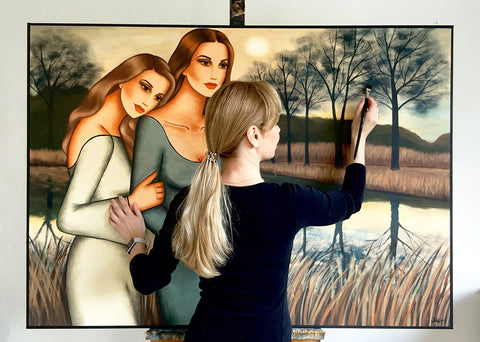
Femininity and Feminism in My Paintings
As an artist dedicated to portraying female beauty and strength, I am often asked about the connection or contradiction between femininity and feminism. This is why I have started to explore the topics of femininity and feminism in more depth and to reflect these themes in my work. In this article, I would like to present my perspective on feminism.
Feminism is described as a political movement that advocates for the social, political, and economic equality of the sexes. The goals of feminism include, among others, the elimination of discrimination against women, the promotion of gender equality in all areas of life, and the strengthening of women's rights and political participation.
Although I consider the equality of men and women in many areas to be a great achievement of our Western world, I view the desire for gender equality in all areas of life as unrealistic. I also find the endeavor to dissolve the categorization into feminine and masculine problematic. For me, these are important life principles that operate within our psyche and can help us to realize ourselves optimally in our lives.
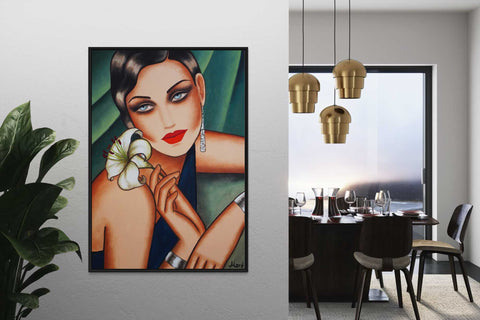
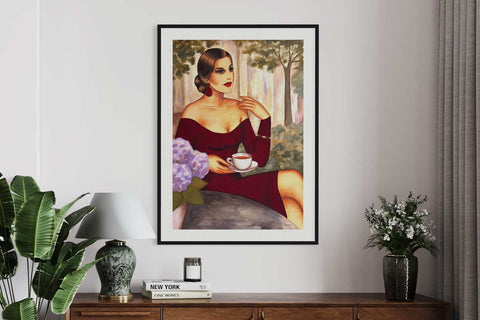
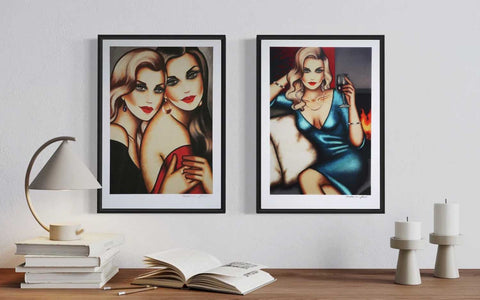
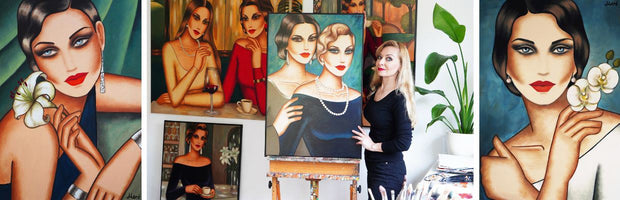
My style, called H-POP (Human Positive Painting), is characterized by colorful motifs that show women in a confident and attractive posture. As an artist, I am neither a feminist nor politically active, but I believe in the strength of women that lies in their gender-specific attributes.
Famous female artists such as Tamara de Lempicka, Frida Kahlo, and Niki de Saint Phalle have also depicted female beauty and strength in their works. De Lempicka was known for her portraits of strong, independent women from the decade between the two world wars. Frida Kahlo, on the other hand, often painted self-portraits that addressed her physical pain and the political oppression of women in Mexico. Another important influence on my art was Niki de Saint Phalle. She used her art to protest against social ills and injustices. Although I am not politically active, I greatly appreciate it when art has a voice and is used for a good cause. Just like Niki de Saint Phalle, I want my art to have a positive effect and inspire women to show their strength and beauty in their different facets.
I see my work as complementary to these famous female artists, as I also celebrate the beauty and strength of women in my paintings, but without a political agenda. My paintings are meant to inspire women and make them feel seen and appreciated.
However, I am aware that some people might view the portrayal of female beauty as sexist, conservative, or regressive. My opinion, on the other hand, is that it is important to have a positive view of humanity. I want to pursue an artistic path that aims at harmonizing opposites, instead of aggressively fighting for gender equality, as most feminists consider meaningful.
For me, equality means that women should have the freedom to live out and explore their femininity, instead of hiding or suppressing it. This freedom should also apply to men who wish to express their masculine attributes in a positive sense.
Femininity and feminism are themes that have played a role in art for a long time. Female artists, in particular, have consistently explored these themes and interpreted them in their own way.

What do I find so inspiring about Tamara de Lempicka?
Tamara de Lempicka was a Polish artist active in the 1920s and 1930s. She is known for her Art Deco paintings, which mainly depict glamorous portraits of women.
De Lempicka had a preference for geometric shapes and strong, contrasting colors, which make her works so distinctive. Her art was often referred to as Art Deco, an aesthetic movement that developed in Europe and North America in the 1920s and 1930s.
She was one of the first female artists to have a career in the art world, which was unusual for her time. She was also one of the first female artists to market herself as a brand ambassador for her works. Her art was very successful and is still appreciated and collected today.
De Lempicka's paintings often depict strong, independent women portrayed as confident, erotic, and attractive. Many of her works have a feminine sensibility that distinguishes them from other artists of the time.
Tamara de Lempicka is an important artist who left a lasting impression on art history. Her works are a testament to her time and demonstrate her vision of women's beauty and strength.
I am also positively inspired by Frida Kahlo.
Frida Kahlo was a Mexican painter known for her impressive self-portraits. She is considered one of the most famous and influential artists in Latin America and created unique art based on her life, culture, and political convictions.
Frida Kahlo was born in Coyoacán, Mexico, in 1907 and spent much of her life recovering from injuries she sustained in a bus accident. This experience had a profound impact on her art and creations. Many of her works address her physical pain and spiritual journey, while others touch upon political and social themes.
Frida Kahlo was a strong and independent woman known for her feminist beliefs and political involvement. She was a close friend and supporter of communists and also had a relationship with the famous artist and communist Diego Rivera.
Her art is known for its vibrant colors and impressive compositional structures. Frida Kahlo often embedded traditional Mexican patterns and symbolism in her works, making them a unique blend of Mexican folklore and modern artistic style.
Frida Kahlo's art has a strong emotional impact and appeals to many people worldwide. Her works inspire and encourage people to confront their own challenges and pains and to appreciate their inner strength. To this day, her works are exhibited in museums and galleries around the world and enjoy great admiration and recognition.
 I was also inspired by the French artist Niki de Saint Phalle.
Niki de Saint Phalle was a French artist who became known in the 1960s for her avant-garde artworks. She worked in many different media, including paintings, sculptures, films, and theater productions. Her art was characterized by its colorful, large, and sometimes provocative forms, which often addressed female sexuality and empowerment.
One of her most famous works is the "Nanas," gigantic and opulent figures that depict women in all their beauty and strength. The Nanas symbolize joy, life, and emancipation and stand in strong contrast to traditional depictions of women in art.
Saint Phalle's works are part of the Pop Art movement, in which she was one of the few women to rebel against the patriarchal art establishment. Her art inspired many female artists who dealt with feminist themes, and she advocated for the rights of women and girls.
Niki de Saint Phalle was an unconventional artist who enriched the art world with her provocative and unorthodox views. Her works continue to inspire today and demonstrate that art can be a powerful tool for change and empowerment.

H-POP and a positive view of the world
As an artist who paints very feminine images of women, I advocate for more beauty and femininity in my work. My style, called H-POP (Human Positive Painting), shows women who appear confident and attractive. I aim to send positive signals so that women can shape their lives with more feminine strength.
I believe in gender equality, but not necessarily in gender sameness. Each gender has its own strengths and qualities that distinguish it and should be valued. As an artist, I try to express this in my works.
Therefore, I tend to be critical of extreme feminism, as it can sometimes lead to the devaluation of the strengths and qualities of both the female and male sexes. Instead, we should focus on strengthening and valuing both sexes to create an equal society. For me, the categorization into feminine and masculine does not emphasize the separation of the sexes, but rather a wonderful complementarity.
As an artist, I also try to see my works as a kind of message. In my paintings, I combine the art styles and inspirations of artists such as Tamara de Lempicka, Frida Kahlo, and Niki de Saint Phalle. Tamara de Lempicka, known for her Art Deco style portraits, painted strong, independent women who unapologetically express their sexuality. Frida Kahlo, on the other hand, with her self-portraits, advanced the feminist concept of "reclaiming the female body" and used her physicality as a weapon for her political agenda. Bold colors and a focus on the female body characterize the art of Niki de Saint Phalle.
In my H-POP paintings, I create a positive and timeless image of women that focuses on their feminine attributes and portrays them as strong and confident. In doing so, I try to give the viewer the freedom to find their own interpretation of the image. My paintings are not politically motivated, but rather an ode to the beauty and strength of women.

Critical voices
Nevertheless, there is occasionally criticism of my work, which is directed against the depiction of women in my paintings and considers them sexist or inappropriate. However, I cannot share this criticism, as I am convinced that it is important to convey a positive image of humanity that highlights the strength and beauty of women. Only with a positive guiding principle can one shape the future positively!
It is important to emphasize that I advocate for gender equality, but not for complete gender sameness. I believe that it is possible to achieve both goals simultaneously by acknowledging the strengths and differences of both genders. In my artworks, I show women who celebrate their femininity and present themselves as confident and strong. This portrayal of women is intended to inspire the viewer to develop a positive view of humanity and to appreciate the strength and beauty of women.
In my work, I do not advocate for feminism, but I believe in the strength and potential of women. I believe in women who live out their femininity. In this sense, it can be said that in my work, I have developed a different perspective on femininity and feminism than, for example, what is currently taught at art academies or universities, or what the mainstream contemporary discourse in the Western world reflects.
In summary, I want to convey a new perspective on femininity and feminism through my work. I believe in the moving strength and potential of women and want to show this in my paintings. I think it is important to convey a positive image of humanity and to encourage women to celebrate their femininity.
In this sense, I hope that my art will provide viewers with a new perspective on femininity and feminism and that they will be inspired to reflect on these topics and form their own opinions.
Online Gallery
Be sure to check out my online gallery and discover which motifs appeal to you most!