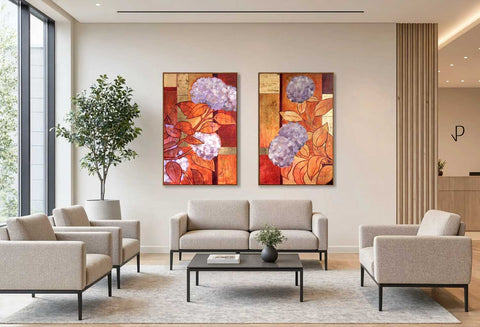
Anyone who has ever entered a hospital, doctor's office, or rehabilitation clinic knows this feeling: some rooms feel cold and anonymous. You want to get the appointment over with as quickly as possible. Other rooms exude an unexpected calm as soon as you enter them. They convey security, trust, and a feeling of being welcome.
Often, it is not individual pieces of furniture or colors that make this difference. Rather, atmosphere is created by the interplay of many small details – through light, materials, acoustics, orientation, and connection to nature.
Especially in healthcare spaces, this atmosphere can be of particular importance. Those who visit a doctor's office or clinic often bring with them uncertainty, worries, or tension. This makes an environment that not only functions efficiently but also feels human all the more important.
Precisely for this reason, art is increasingly gaining importance in doctor's offices, clinics, and other healthcare spaces today. More and more institutions are addressing the question of how architecture, nature, and original art can collectively create an atmosphere in which people feel welcome.
But what creates a space where people can relax more easily? And what role can nature, design, and art play in this?
These questions are not only being addressed by architects and interior designers today but also by scientists from the fields of environmental psychology, health research, and architecture. Increasing insights from architecture, environmental psychology, and healthcare design suggest that the design of a space influences our experience far more strongly than long assumed.
About the Author:
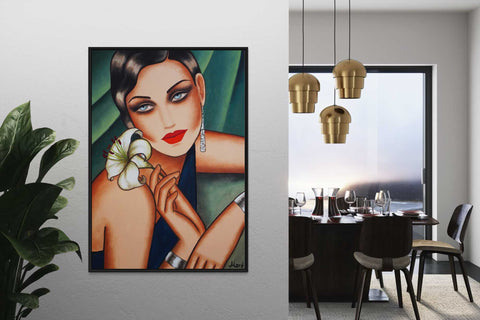
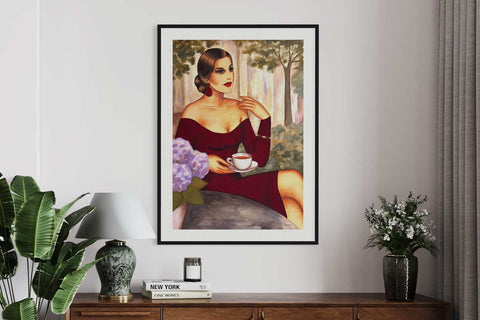
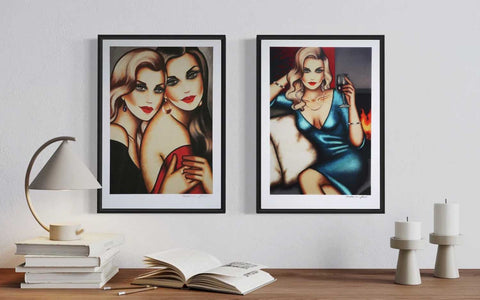
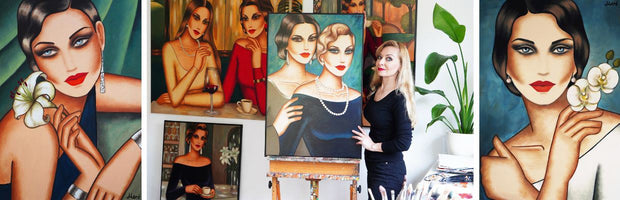
For over 25 years, Ekaterina Moré has been exploring why some spaces immediately touch people. In her floral original paintings and female portraits, she examines how color, nature, and art can create atmosphere and lend warmth, identity, and humanity to spaces.
What this article is about
This article shows how architecture, nature, and original art can jointly contribute to an atmosphere in which people feel welcome – and why this topic is gaining increasing importance for modern doctor's offices, clinics, and healthcare spaces.

1. Why atmosphere is part of good healthcare spaces
A healthcare space consists of much more than medical equipment. It is the first impression of a practice or clinic and often accompanies patients at a moment when they are particularly attuned to their surroundings.
Even before a doctor conducts the first consultation, the perception of the room begins. Daylight, colors, materials, sounds, smells, orientation, and proportions are processed unconsciously. Within a few seconds, a feeling arises whether a place conveys security or rather creates distance.
Therefore, architects and healthcare planners are increasingly talking about the so-called Healing Environment. This refers to a design concept that plans spaces in such a way that they can support people's well-being. The goal is not to treat illnesses – that remains the task of medicine. Rather, it is about creating an environment in which patients, relatives, and staff feel as comfortable and well-cared for as possible.
Such an overall concept includes many elements:
-
clear architecture with good orientation,
-
pleasant daylight and thoughtful lighting,
-
natural materials such as wood or stone,
-
calm acoustics,
-
harmonious colors,
-
plants and nature references,
-
as well as consciously selected art.
It is only the interplay of all these factors that creates the atmosphere that people often intuitively perceive without being able to precisely name why they feel comfortable in a place.
More and more modern healthcare buildings are therefore not exclusively oriented towards functionality. They understand the space itself as an important component of a positive patient experience.
Did you know?
The first impression is formed in a few seconds. Even before a doctor conducts the first consultation, our brain processes light, colors, sounds, materials, and orientation almost automatically. This first spatial impression significantly influences how we perceive a place.

2. People react more strongly to spaces than we long assumed
For a long time, the technical function was primarily the focus when building hospitals and doctor's offices. Today, however, there is growing awareness that the built environment can have a significant impact on our experience.
Among others, environmental psychology and evidence-based design are concerned with this question. Both research directions investigate how architecture, light, colors, nature, or art influence people's behavior, orientation, and subjective well-being.
Another term often used in this context is positive distraction. This refers to conscious stimuli that can divert attention from worries and burdens to something pleasant – for example, to plants, water, daylight, or atmospheric artworks.
Numerous research studies repeatedly show a similar picture: people often find natural and harmoniously designed spaces more pleasant and less stressful than sterile or purely functional environments. Such insights are increasingly being incorporated into the planning of modern healthcare spaces today.
Therefore, more and more clinics, doctor's offices, and health centers are dealing with questions of atmosphere already in the early planning phase. Architecture and interior design are no longer understood as mere shells, but as important components of a holistic spatial concept.
From research
For several decades, environmental psychologists have been investigating how architecture, daylight, nature, and art influence the experience of spaces. Today, these findings are increasingly being incorporated into the planning of modern hospitals, doctor's offices, and rehabilitation centers worldwide.

3. Why nature has been perceived as healing for millennia
The connection between nature and health is by no means a modern idea. Long before there were scientific studies on environmental psychology or healing environments, people sought recreation in gardens, forests, and landscapes.
Monastery gardens were among the most important places of healing for many centuries. Medicinal plants were cultivated there, medicines were produced, and quiet retreats were created. Courtyards and green gardens also played an important role in many historical hospitals. They offered patients light, fresh air, and a place of peace.
Even today, we naturally associate walks in the forest, gazing over a landscape, or spending time in a garden with recreation. Even small nature experiences can help to distance oneself from everyday life and take a moment to breathe.
This deeply rooted relationship with nature is taken up by a scientific concept known today as biophilia. It describes the assumption that humans have an innate connection to the natural environment and therefore often feel more comfortable in naturally designed surroundings.
From this insight, Biophilic Design developed – a planning approach that deliberately integrates natural materials, plants, organic forms, daylight, and nature references into architecture and interior design.
Especially in healthcare spaces, this idea is gaining increasing importance. Often, it is not spectacular gestures, but many small elements of nature that can lend peace, warmth, and humanity to a room.
Proven for centuries
For many centuries, monastery gardens were among the most important sites of European medicine. They combined medical knowledge with medicinal plants, quiet paths, and places of contemplation – long before terms like Healing Environment or Biophilic Design emerged.

4. The Symbolism of Flowers and Plants
Flowers have accompanied humanity for millennia. They adorn temples and churches, accompany weddings and funerals, symbolize love, hope, or gratitude, and are found in almost every culture. Hardly any other motif connects people so naturally with positive memories and emotions.
Perhaps that's why we almost automatically give flowers to a sick person. Not because we believe they can cure illnesses, but because they express care, hope, and joy of life. They bring a piece of nature into a room and remind us that growth, change, and new beginnings are part of life.
Flowers have also played a special role in art history for centuries. Renaissance, Baroque, Art Nouveau, or Art Deco – each era developed its own visual language and gave plants a symbolic meaning that went far beyond their external beauty.
Many of these meanings have been preserved to this day.
The Magnolia is considered a symbol of dignity, purity, and a new beginning in many cultures. It is one of the oldest flowering plants on Earth and stands for constancy as well as renewal.
The Apple is one of Europe's best-known cultural symbols. In Greek mythology, it stands for beauty and immortality, among other things. In later Christian art, it was associated with the tree of knowledge and thus with knowledge, temptation, and human curiosity. Fairy tales tell of the golden apple as a sign of hope, trial, or transformation. To this day, many people associate the apple with nature, health, and vitality.
Lavender has been associated with tranquility and balance for centuries. Its scent reminds many people of southern landscapes and relaxed summer days. Thus, it symbolically stands for serenity and inner balance.
The Olive Branch is one of the oldest symbols of peace in human history. Already in antiquity, the olive tree was considered a sign of hope, wisdom, and a long life.
The Pomegranate symbolizes fertility, vitality, and abundance in numerous cultures. Its multitude of seeds made it an early symbol of new life and growth.
The Grapevine has stood for community, enjoyment, and abundance for millennia. At the same time, it reminds us that patience is necessary for something to grow and mature.
The Lemon is often associated with freshness, light, and Mediterranean zest for life. Its vibrant color conveys energy and optimism and reminds one of sunny landscapes.
The elegant Calla, finally, is considered a symbol of clarity, dignity, and timeless beauty. Its minimalist form appears calm and modern and therefore blends particularly harmoniously into sophisticated interiors.
All these meanings are not fixed rules. But they show that flowers, fruits, and plants in our culture have been far more than decorative motifs for centuries. They tell stories about life itself – about growth, hope, change, and beauty.
Perhaps that is why floral motifs still touch people from diverse cultures so directly.
Individual works and series of paintings can also be created for practices and clinics upon request. I describe how such commissioned paintings are developed in more detail in my article on commissioned art.
👉 Learn more about Floral Glamourism:
➤ To the article: "Floral Glamourism – The Poetry of Floral Forms between Art Deco and Eternity"
➤ To the article: "Neo Deco – The New Elegance between Art, Space, and Time"
➤ To the article: "Floral Art with Gold – why luster creates depth"

5. Medicinal Plants – when nature has offered hope for centuries
Long before modern medicines were developed, people relied on the healing power of nature. Almost every culture knew plants that were not only valued for their practical application but also offered hope and conveyed confidence.
Medieval monastery gardens were much more than mere utilitarian gardens. They combined medical knowledge with peace, contemplation, and the experience of nature. Many of the plants cultivated there still accompany us today.
Chamomile has been one of Europe's best-known medicinal plants for centuries. It symbolically stands for calming, care, and gentle healing.
Lavender was valued not only for its pleasant scent. Early on, it was associated with purity, relaxation, and inner peace.
Rosemary was highly esteemed in antiquity as a symbol of remembrance and vitality. Its evergreen branches also made it a sign of constancy.
Sage was already highly valued by the Romans. Its name derives from the Latin salvare – to save or preserve – referring to its long cultural-historical significance.
Poppy also possesses a multi-layered symbolism. On the one hand, it stands for sleep and recuperation; on the other, for transience and the power of letting go.
The olive tree is one of humanity's oldest cultivated plants. It uniquely combines peace, health, and longevity.
The grapevine, in turn, reminds us that health is not only associated with medical care but has always been linked to community, joy of life, and pleasure.
These plants do not represent medical promises. Rather, they reflect the hopes that people have associated with nature for centuries. This is precisely why their motifs can still evoke a special emotional effect today. They connect to cultural memories deeply rooted in our collective consciousness.
Medicinal plants have accompanied humanity for millennia
Chamomile, sage, rosemary, and lavender are among Europe's oldest cultivated plants. Their significance extends far beyond their traditional use – they still represent care, tranquility, hope, and the close connection between humans and nature.

6. What distinguishes original art from decoration
When discussing the design of healthcare spaces today, the term art is often used. However, this often refers to interchangeable decorative prints or pictures primarily intended to fill a blank wall.
Original art takes a different approach.
A hand-painted artwork possesses a presence that cannot be explained solely by the motif. Light refracts on different surfaces, layers of paint create depth, textures change depending on the viewing angle, and each work carries the traces of its creation process.
This haptic quality can only be reproduced to a limited extent even with high-quality reproductions. An original thus develops a spatial effect that goes far beyond its mere depiction.
This difference is particularly evident in carefully designed interiors. Natural materials such as wood, stone, or linen derive their character from their individuality. Original art follows the same principle. No two works are alike; each has its own unique color, surface, and aura.
Therefore, original art fulfills more than just a decorative function. It can give a room identity, create focal points, and contribute to an environment being perceived as high-quality, personal, and authentic.
Especially in healthcare settings, where trust and humanity play an important role, precisely this individuality can make the difference between a functional setup and an atmosphere where people feel welcome.
Original or art print?
An original changes with the light. Depending on the time of day, colors, textures, and surfaces appear differently. This very liveliness is what makes hand-painted art so appealing and can hardly be fully replicated even with high-quality prints.

7. Why floral original art is particularly suitable for healthcare spaces
When architecture, light, materials, and nature speak a common language, a space that radiates tranquility is created. Floral original art can complement this atmosphere in a special way.
Flowers are among the few motifs that evoke predominantly positive associations across cultures. They appear familiar, timeless, and yet vibrant. Unlike very abstract or provocative art, they often create an access point that appeals to people of all ages and backgrounds.
In my own works, therefore, the botanical accuracy of a single flower is less central. I am more interested in what flowers have stood for centuries: growth, change, hope, vibrancy, and quiet elegance.
This idea gave rise to my series of works, Floral Glamourism. Large-format original paintings combine floral forms with a clear visual language inspired by Art Deco. Golden surfaces, multi-layered structures, and harmonious color palettes create a calm presence that deliberately does not push itself into the foreground but becomes part of the overall room concept.
Especially in high-quality doctor's offices, private clinics, or health centers, such works can contribute to creating an atmosphere that combines professionalism with warmth. They do not set a loud accent but invite the viewer to let their gaze wander for a moment – and perhaps thereby bring some calm to an often tense situation.
Good art begins with listening
Not every practice requires the same motifs. What is always crucial are the people who experience the space daily, as well as the desired atmosphere. An individual art concept, therefore, is not based on trends but on the character of the place.
More about this:
➤ To the article: "Art for Practices & Waiting Rooms - how floral originals promote well-being"

8. What kind of art suits which practice?
Every medical specialty has its own atmosphere. The demands on art vary accordingly. While some rooms are primarily intended to convey calm and orientation, others can certainly be inspiring or emotional.
Therefore, there is no one-size-fits-all solution. Far more important is the question of what mood a room aims to create and what kind of people use it daily.
General practitioner's office
General practitioner's offices often accompany people for many years. Patients of all age groups come together here – from young children to seniors. Nature-inspired motifs, harmonious color palettes, and floral original art create a calm, inviting atmosphere that conveys trust without being obtrusive.
Dental practice
Many people associate a visit to the dentist with tension. Bright floral motifs, friendly colors, and a clear visual language can help make the room feel more open and pleasant. Works with light, airiness, and soft color gradients are particularly suitable.
Psychotherapy and psychosomatic practices
Here, inner calm is often the focus. A reduced visual language, natural textures, and subdued color compositions leave room for personal thoughts and interpretations without being emotionally overwhelming.
Naturopathic practitioners and natural health practices
Natural health practices often take a holistic view of health. Accordingly, the atmosphere of the practice plays a special role. Natural materials, plants, and a calm color scheme create a harmonious setting for conversations and treatments. Floral original art, medicinal plant motifs, or nature-inspired imagery can complement this concept in a harmonious way and emphasize the idea of a holistic practice design.
Gynecologist's office and women's health
In gynecological practices, breast centers, or fertility clinics, images can often be more personal. Floral motifs can be harmoniously combined with sensitive female portraits here. They can express appreciation, strength, and femininity and create an atmosphere in which many patients feel seen and welcome.
Dermatologist's office and dermatology
Dermatological practices increasingly combine medical expertise with high-quality interior design. Bright, elegant color palettes and floral original art create an atmosphere that combines professionalism with lightness and adds warmth to often clinical-looking rooms.
Aesthetic medicine and private clinics
In aesthetic practices, design, elegance, and high-quality materials often play a greater role. Art can consciously become part of the interior concept here. A clear visual language inspired by Art Deco, harmonious color palettes, and high-quality originals emphasize the premium character of such spaces.
Ophthalmologist's office
In ophthalmologist's offices, patients often spend time in waiting areas or during various examinations. Calm nature motifs, harmonious colors, and clear compositions can create a relaxed atmosphere without unnecessarily overloading visual perception.
Orthopedics and rehabilitation centers
Spacious rooms often benefit from large-format works with a calming presence. Landscape elements, floral compositions, or abstracted natural forms can convey expanse and give the rooms a pleasant balance.
Hospices and palliative care areas
Especially where people are going through particularly sensitive phases of life, atmosphere takes on an exceptional importance. Gentle lighting moods, bright color palettes, and subtle nature motifs can help make rooms feel more human and dignified.
The following recommendations are not fixed rules, but rather design guidelines. Architecture, target group, color concept, and the desired atmosphere of the respective practice remain decisive.
Ultimately, it is not about establishing rigid rules for every specialty. Good art always begins with understanding the character of a place and complementing it with a suitable visual world.
If you are professionally planning a practice or clinic project, you can find more information here about my collaboration with interior architects and interior designers as well as about individual art solutions for specific spaces.
A look into the future
More and more healthcare buildings are orienting themselves towards the hospitality industry. Quality of stay, high-quality materials, daylight, plants, and individual art are increasingly understood as part of a holistic patient experience.

9. Female portraits as a symbol – when they are particularly effective in healthcare spaces
Not every motif is suitable for every environment. This also applies to female portraits.
While floral art can be used almost universally, stylized female portraits unfold their special effect primarily where identification, empathy, and personal address play an important role.
Especially in gynecological practices, breast centers, fertility clinics, or women's health facilities, they can be more than mere decoration. They convey dignity, strength, joy of life, and self-confidence – values that appeal to many patients in an often sensitive phase of life.
It is not about depicting specific individuals. My female figures are rather timeless symbols. They invite the viewer to find their own thoughts, memories, or feelings in them. Precisely this openness is what makes them effective.
In other medical areas, a purely floral visual language can often have a more universal effect. That is why many of my current works are deliberately created without figures. Flowers, light, and natural forms appeal to people regardless of age, origin, or life situation and blend harmoniously into a wide variety of healthcare spaces.
Female portraits and floral art are therefore not opposites. Rather, they complement each other – each where they can unfold their greatest strength.
More about art for gynecological practices:
➤ To the article "Female portraits for doctor's offices – Art for gynecology & aesthetics"
More about the philosophy of Flowism:
➤ To the article "Flowism: Femininity, joy of life & modern art in flux"
➤ To the article: "The 7 most common furnishing mistakes in gynecological practices – and why they often unconsciously erode trust"

10. Healthcare spaces of the future
The design of medical practices and clinics is changing. Modern healthcare spaces are no longer solely functional. They should provide orientation, reduce stress, and consider the well-being of patients, relatives, and staff alike.
International developments such as Healing Architecture, Biophilic Design, and Patient Experience show that architecture is increasingly being thought of holistically. Buildings are no longer understood merely as technical infrastructure but as living spaces.
The boundaries between healthcare and high-end hospitality are becoming increasingly blurred. Many private clinics, rehabilitation centers, and modern medical practices deliberately orient themselves towards the qualities of sophisticated boutique hotels. Reception areas appear more open, waiting areas are designed to be more homely, and materials such as wood, natural stone, or fabrics create a warm atmosphere.
At the same time, sustainability and natural materials continue to gain importance. Daylight, plants, organic forms, and durable furnishing concepts are increasingly understood as an integral part of modern architecture.
In this context, art also changes its role. It no longer serves solely for decoration but is increasingly understood as a conscious design element that connects architecture, nature, and interior design.
Healthcare spaces of the future emerge where functionality and humanity meet – and where spaces not only work efficiently but also convey the feeling of being in good hands.

11. Art doesn't replace medicine – but it transforms spaces
Despite all the enthusiasm for architecture and design, a clear distinction is important: art does not cure diseases.
Diagnoses, therapies, and medical treatment naturally remain the responsibility of doctors, nurses, and therapists.
Nevertheless, people often spend many hours or even weeks in healthcare settings. They wait for examination results, accompany relatives, or are themselves in a stressful life situation. In such moments, the atmosphere of a room plays a greater role than one might initially assume.
Whether light feels pleasant, whether materials radiate warmth, whether plants and art draw attention to something positive, or whether a room conveys security – all of this influences how people experience their surroundings.
This is where good design comes into play.
It does not replace medicine. It complements it.
It does not offer a cure. However, it can contribute to people feeling respected, welcome, and taken seriously.
Perhaps that is why a good healthcare space does not begin with modern technology or high-quality furnishings. Perhaps it starts with a simple question:
How should a person feel when they enter this space?
For me, this question is at the beginning of every art concept. Because, in the end, it's not just about designing walls, but about creating spaces where trust, tranquility, and humanity become palpable.
An important distinction
Art cannot replace medical treatment. However, it can help make spaces feel more human, inviting, and appreciative – and that is its particular strength.
12. How an individual art concept is created
Every healthcare space is different. That's why I never start with a finished image, but always with the space itself.
I am first interested in which people use this place daily. Is it a general practitioner's office, a private clinic, or a rehabilitation center? What atmosphere should be created? Should a reception area radiate openness, a waiting room provide calm, or a meeting room convey inspiration?
Equally important are the spatial conditions. Daylight, wall surfaces, materials, floor coverings, and the existing color scheme influence how a work of art will later appear. A picture never unfolds its effect in isolation, but always in interaction with its surroundings.
That's why, for larger projects, I like to work with digital mockups. Possible original paintings are realistically inserted into the existing rooms in advance. This creates a very concrete impression of how formats, colors, and compositions harmonize with each other.
Only when space, architecture, and art speak a common language does the selection of suitable works begin.
Sometimes this results in a series of large-format paintings for a lobby or a reception area. In other projects, a coherent concept for corridors, waiting areas, or treatment rooms is developed. The goal is always not to create arbitrary decoration, but an imagery that emphasizes the character of the place.
Because for me, good art does not begin on the canvas. It begins with an understanding of people and space.
👉 Non-binding consultation for practice rooms: info@ekaterina-more.com

13. Thoughts from my studio
For more than 25 years, I have been exploring the question of why some pictures immediately touch people while others are barely noticed. I have not yet found a definitive answer. But I have observed many things.
For many years, I have noticed that people often slow down in front of flower pictures. They stop, look at individual details, or spontaneously start talking about which garden or trip the picture reminds them of. Flowers seem to awaken memories that go far beyond their actual form.
Perhaps this is because we have all grown up with nature. Even those who live in the middle of a big city often associate the scent of a flower, a sunny garden, or an old tree with peace and security.
Time and again, I encounter rooms that are perfectly furnished yet still seem surprisingly cold. They lack not design or high-quality materials – but something personal. A work of art can sometimes fill this gap. Not because it is loud, but because it gives a room its own story.
I am also fascinated by the fact that people never see pictures all the same way. Everyone brings their own experiences. Some discover colors, others remember a place, or connect a motif with a special moment in their lives. Perhaps that is the true strength of art: it doesn't tell finished stories. It invites you to discover your own.
And perhaps the greatest power of a successful healthcare space lies not in how modern it looks, but in how welcome a person feels within it.
Perhaps a good healthcare space begins where people are not only treated but also welcomed.
14. FAQ - Frequently Asked Questions about Art in Doctors' Offices and Healthcare Spaces
What kind of art is suitable for doctors' offices?
Motifs that convey peace, naturalness, and openness are particularly well suited. Floral original art, nature motifs, or harmonious abstract works are often perceived as pleasant and timeless. However, the overall concept of the respective practice is always decisive.
Why original art instead of art prints?
Original paintings possess a special spatial effect. Textures, light reflections, and individual surfaces give them depth and character. This allows them to shape rooms in a way that is only partially possible with reproductions.
What is a sensible image size?
This depends on room height, wall area, and viewing distance. In spacious reception areas, large-format works often appear particularly harmonious, while smaller treatment rooms often benefit from medium formats.
Are flower paintings suitable for every practice?
Floral motifs are among the most versatile image themes available and can be used in almost all healthcare areas. They appear timeless and create a natural connection to the idea of a healing environment.
Are female portraits suitable for every practice?
Not necessarily. They are particularly well suited for gynecological practices, breast centers, fertility clinics, or women's health facilities. In many other areas, floral motifs are more universal.
Can artworks be individually tailored to a project?
Yes. For larger projects, an overall concept is first developed. With the help of digital mockups, it can be checked even before implementation which works best suit the respective room in terms of format, color scheme, and atmosphere.
How does a collaboration work?
After an initial consultation, the spatial conditions are analyzed. Subsequently, proposals for suitable original paintings, formats, and hanging are developed. The goal is always a harmonious overall concept that connects architecture and art.
15. Glossary of Important Terms
Healing Environment
A design concept for healthcare spaces that consciously uses architecture, light, materials, nature, and art to support the well-being of patients, relatives, and staff.
Biophilia
The assumption that humans have an innate connection to nature and therefore often feel more comfortable in naturally designed environments.
Salutogenesis
A concept by medical sociologist Aaron Antonovsky. The focus is not on how diseases arise, but on which factors can promote health, resilience, and well-being.
Positive Distraction
Consciously designed elements such as plants, daylight, water, or art that draw attention to pleasant stimuli and can thus make stressful situations feel less dominating.
Evidence-Based Design
A planning approach that uses findings from scientific studies to design buildings and interiors as user-oriented as possible.
Patient Experience
The overall impression that patients experience during their stay in a practice or clinic – from appointment scheduling to atmosphere to medical care.
Environmental Psychology
A field of research that examines how our built and natural environment influences thought, behavior, emotions, and well-being.
Original Art
A unique hand-painted piece that possesses a unique spatial presence through materiality, surface structure, light effect, and individual execution, and thus fundamentally differs from an art print.
Sources and Further Reading
This article combines my personal experiences from over 25 years of artistic work with insights from architecture, environmental psychology, and healthcare design. Those who wish to delve deeper into the topics of Healing Environment, Biophilic Design, and the design of healthcare spaces will find further information in the following publications, among others:
-
Antonovsky, Aaron: Salutogenesis – On the Demystification of Health.
-
Kellert, Stephen R.; Heerwagen, Judith; Mador, Martin (Eds.): Biophilic Design – The Theory, Science and Practice of Bringing Buildings to Life. Wiley, 2008.
-
Tekin, B. H.; Corcoran, R.; Gutiérrez, R. U. (2023): A Systematic Review and Conceptual Framework of Biophilic Design Parameters in Clinical Environments. HERD – Health Environments Research & Design Journal.
-
Terrapin Bright Green (2014): 14 Patterns of Biophilic Design.
-
The Center for Health Design: Evidence-Based Design and Healing Environment. https://www.healthdesign.org
-
Ulrich, Roger S. (1984): View through a Window May Influence Recovery from Surgery. Science, 224(4647), 420–421.
Art for Your Practice or Clinic
Would you like to know which original paintings could suit your rooms, your color scheme, and the desired atmosphere?
Based on room photos, floor plans, or existing interior designs, I develop initial suggestions and, if desired, visualize selected works in digital mockups. This allows you to see how format, colors, and visual impact harmonize with the room before making a decision.
I look forward to discussing a special art concept with you without obligation: info@ekaterina-more.com